Yeah that’s correct.
How will you aim your turret?
- Odometry
- Vision Sensors
- GPS Sensors
- I’m not building a turret
0
voters
I want to do GPS, but I don’t know if it’s standardized. Does it have to be there in competitions? Or is it just a luck of the draw?
You could also use a combination of inertial and distance sensors.
GPS is necessary for programming skills fields, but not required anywhere else, so it’s be a gamble for teamwork if they have the gps strips
A 600 rpm direct drive base does not seem viable unless you are using incredibly small wheels (even if you are using 6 motors)… are you sure you will be able to run 600 rpm direct drive?
I am going to try all 3 methods and prob use each in diff situations
just to clarify some things, odometry is literally just “position tracking”. and as seen by the Wikipedia definition of odometry, it is "the use of data from motion sensors to estimate change in position over time. "
Thus, using the GPS sensor is technically just another form of odometry. so next time please specify “tracking wheel odometry” or “gps odometry”.
I don’t think I’ve ever heard someone call GPS sensors Odometry. You’re not wrong, but I would say unless I’m immensely off, most people in the forums call tracking wheel Odometry just Odometry, and GPS Odometry as GPS
alright got it, thanks for clarifying, haven’t been on the forums for a while 
you don’t need up/down motion jusst change flywheel speed
I would just like to make a general statement to all that are immediately dismissing vision sensors. Lighting SHOULD NOT AFFECT THEM, as long as you follow the robot inspection sheet and configure your vision sensor on the field at the beginning of the day. Yes, the lighting at fields will be different from your work area. At worlds, my team had issues with the lights in the ceiling, but we soon realized that we just needed to shift the colors a bit for yellow goals. Please stop saying they are bad without trying them for yourself.
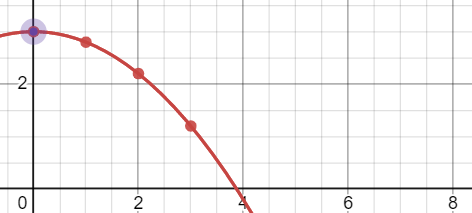
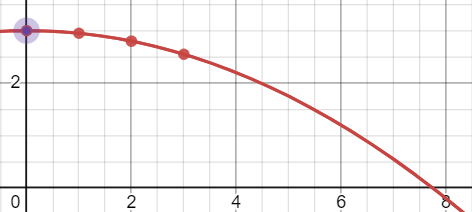
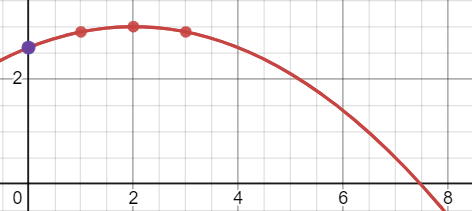
changing the flywheel speed and moving up/down do different things. they can be used to achieve basically the same thing, but both have different pros/ cons. changing flywheel speed make the curve of the disc more flat, while changing the pitch of the launcher makes the curve “taller”.
(for the sake of simplicity let’s say that the path of the disc is a parabola)
original (basically 90* angle) :
faster flywheel (same angle as original) :
larger angle (same speed as original):
There are 2 main color-reading issues to overcome when using the vision sensors. You are referring to calibrating the color value for a new lighting condition, which you are correct to point out is a solvable problem. The other problem is the venue having significant amounts of red or blue in the background.
This year there is the net behind the main thing you might be trying to find - which could possibly help. EP’s will also likely try and cover any obvious problematic areas. There are limits if the color theme of a space is extensive.
That’s true, at regional champs there was a red bin holding up the field monitors, so I just asked and they were immediately just like oh, yea we’ll fix that. I guess it goes on a comp-by-comp basis
While its nice that your event partners were helpful in creating a sensor friendly environment, I also want to point out that in the past this hasn’t always necessarily been the case:
And last season at my region’s championship the red tent outside of the concessions building + the bright/variable lighting (due to the event being held outside) was enough to throw off teams’ autons:
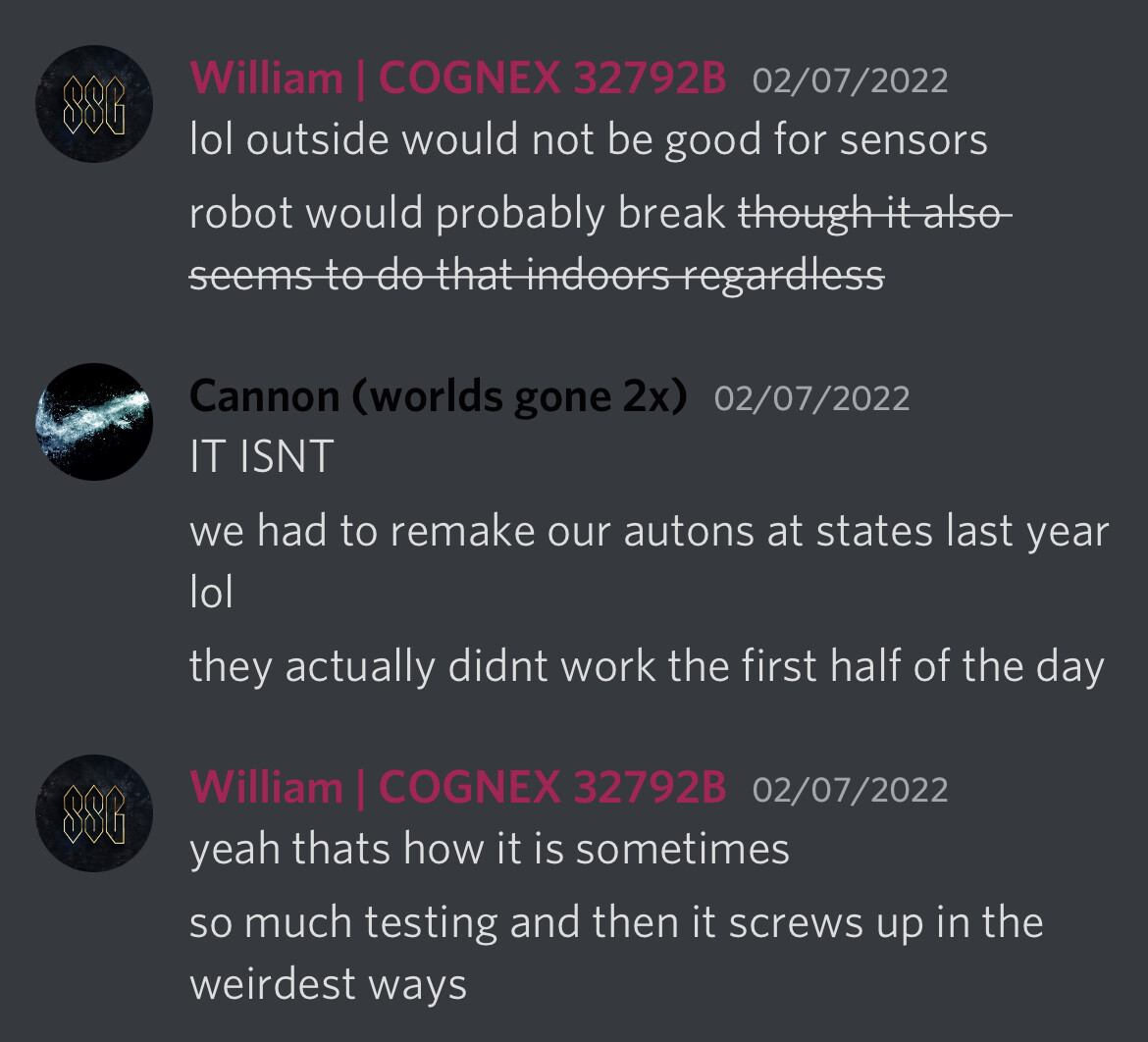
So if any team is planning on using any light based sensors, just note that you should be flexible in your implementation to account for event lighting and environment variance. Not every event is going to have sensor friendly environments, and not every event partner is going to be able to (or willing to, as shown in the VF thread linked above), to change said environment to better suit the needs of competing teams.
Hey, what are you guys doing about the wires? Currently we’re trying to think of some wacky design for the wires to make it rotate as much as we want, but we’re trying to figure out A) how to do it and B) if we can even do it VEX legal. I’m sure there’s some other method, or just everyone’s ignoring them.
My plan is not to have a 360 rotating turret.
First off 360 degree rotating turret seems very difficult to get working well with disks and the limitations of vex hardware.
Not doing full 360 also prevents wire tangling, and I feel like about 270 degrees of movement should be enough for most purposes imo
Would the optical sensor work as a substitute?
I thought about this as well, but what I realized is the discs this year are not spherical, they are flat. If you were to shoot a ball upwards at an angle, it would create that kind of curve, but because the discs are flat, they won’t follow the same pattern. If you throw a frisbee up at an angle, it comes back to you instead which would not be very useful when you want to shoot across the field.
I think that an adjustable hood wouldn’t be very practical this year because the disc physics are a lot harder to predict than a simple ball, and if you want to make the disc go farther, you will have to change the speed of the flywheel instead of the vertical direction of the disc. Changing which way it shoots vertically will be extremely inaccurate for this years game.