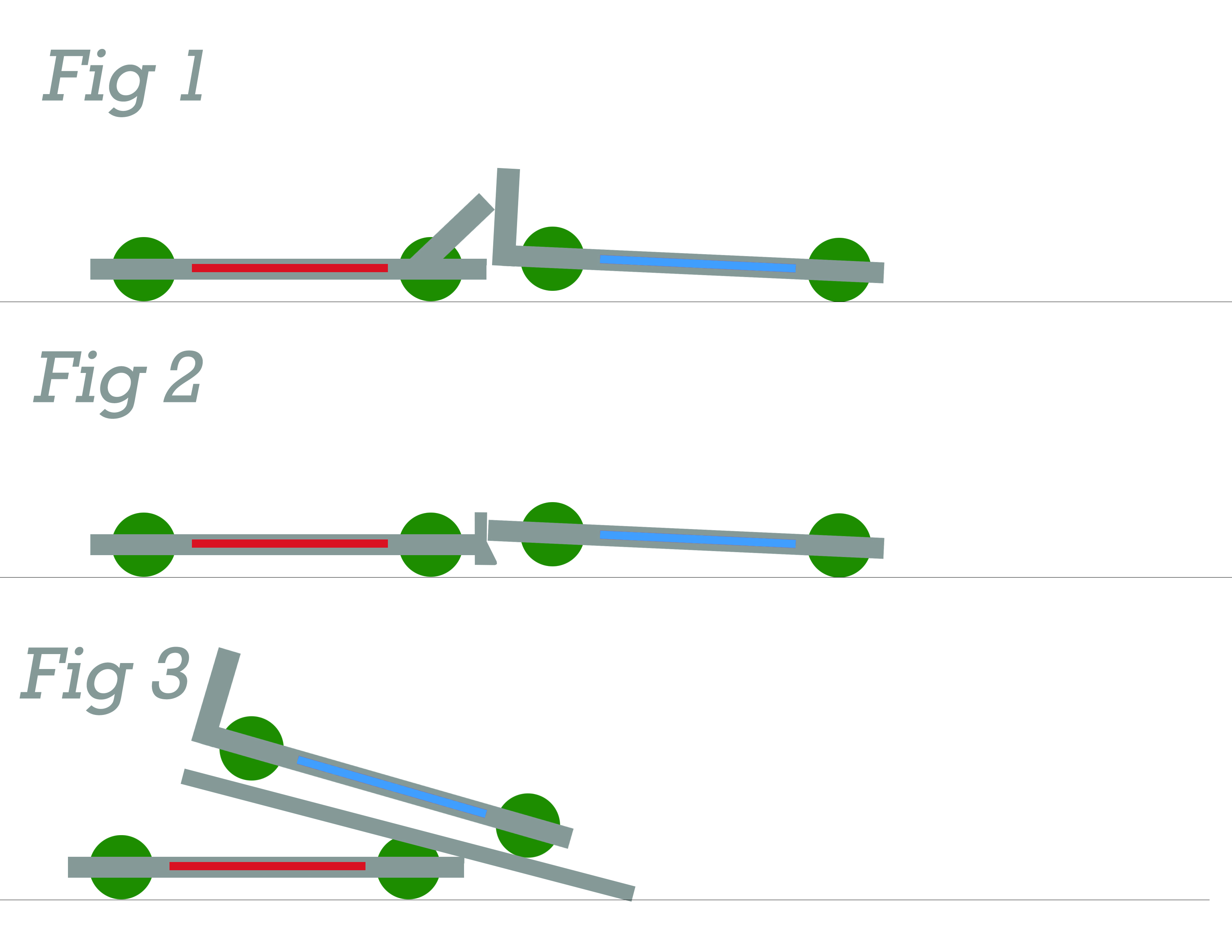
Is it legal to shape a side of a robot chassis using an angle with the intent of minimizing adjacent robot traction during pushing, while still remaining fully responsible for tipping (Figure 1)? While this system is either defensively or counter-defensively employed, tipping would remain unlikely because the pre-mentioned angles only raise the front wheels a minuscule amount. Along with this, the system would not have any intention of making the contacting robot incapable of moving.
This is the only similar post on the forums, however, the mentioned system is completely different: “such that the robot on top is incapable of moving” by lifting the opponent’s “robot … completely off the ground.” As seen in figure 3, both the intent and the mechanism vary entirely.
Here, you stated that “Generally rigid mechanisms such as the one shown in the attached photos do not pose entanglement risks. If the “cage” was instead built out of a flexible material like string, surgical tubing, or rubber anti-slip mats, then it may be more susceptible to an entanglement risk/violation.” Therefore, if these angles are made of a rigid material and are designed against entering spokes of wheels, would these angles pose an entanglement threat?
Thanks,
Lewie