I’m polling the community to gauge interest in an idea I have for a custom v5 module. The module would bring WiFi and Bluetooth connectivity to the v5 brain to send telemetry data wirelessly to devices like a laptop, phone or tablet. This would allow users to monitor motor and sensor data, change autonomous programs / values instantly over the air, and export graphs of testing data for notebooking purposes. I believe this would benefit the robotics community by making troubleshooting easier, calibration for pid and autonomous programs easier, and improving notebooks by providing accurate visual representations of testing mechanisms. This would obviously need to be disconnected from the robot before competitions but for autonomous programming, testing, and design processes it would be a huge help and time saver.
What do you all think of this concept? Standard vex v5 modules and sensors are priced around $50usd, would you pay the same for a custom module?
And you can buy a Micro USB to female USB for additional connections:
You will need two wifi antennas. The first one is to connect to the pi and the second is for the pi to connect to a network. The Zero/Zero 2 W has its own antenna, so you only need a single second antenna: USB WiFi Adapter for Raspberry Pi - The Pi Hut
The code above is a good reference point for hot spot creation and connection. And this will let you program the robot while still being connected to the internet.
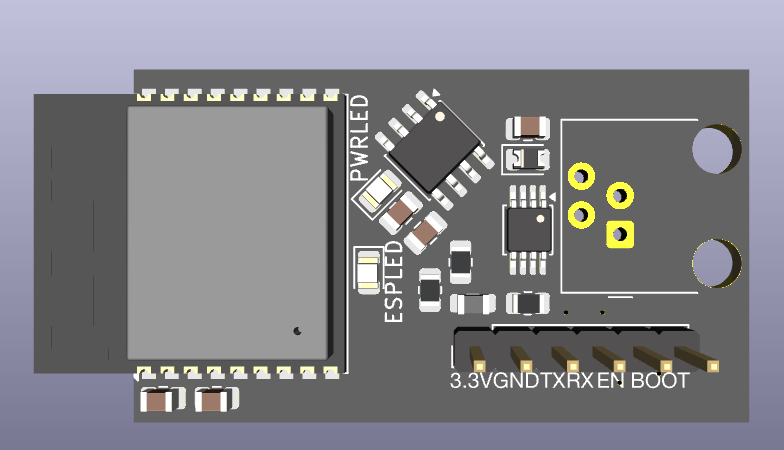
When i get to my computer i can send more information but my plan wouldn’t be using the usb connector. I designed a custom pcb that connects to the standard RJ9 and uses the Max3485 chip to connect the esp32 c3 wroom allowing communication between the brain and wifi. Allows me to run a wifi server and bluetooth connection
This sounds amazing! I would love to see what you make out of it!
If it’s ok to ask, I’m very intrigued. Where/how did you learn your pcb and electrical/embedded systems experience? Do you know of some resources that can help me better understand and grow myself about these things?
As a mild tip, maybe try the thvd1450 over the max3485. It’s a much more static resistant chip that Vex has upgraded to using in their newer revision on the brain. I’d also suggest looking into TVS diodes if you haven’t, as they can also prevent static issues, which are prevalent with vex robots.
This is the pcb I designed with the MAX3485 chip (45 degree angle next to esp) and a 3.3V regulator chip (TPS62160DGK), the esp is an esp32 c3 wroom. There is a 6 pin connector for a usb programming board to attach and program the board before being put into its case. The final size of the module is the same dimensions as a standard v5 radio but if you chop off the extra antenna long bit. It’ll have the standard 2 8-32 threaded inserts and a plastic nub to align to vex holes. Since I’m going to 3d print the case with standard Ender 3 pros (upgraded) the leds won’t be visible and are there for testing purposes. One LED is on the output of the 3.3V regulator (PWRLED) and the ESPLED is connected to a GPIO so I can set it in the program. Planning on just using it to show when it’s connected to wifi.
To answer the question of where I get my design experience, it’s the same with every other skill I’ve ever taught myself. Watch a bunch of different YouTube videos from different people and practice abstracting ideas from it. Someone will make a tutorial on how to code a calculator terminal program in some programming language, cool, but can you modify it to do different operations? That’s how I quickly learn skills is I watch YouTube, read documentation or datasheets, then I just change it based off of what I need.
This is my first ever PCB design and I may have made mistakes or it might not be the most optimized thing in the world. I guess we will see if it works when it gets to my house.