That statement needs some clarification.
If you have plenty of margin in the driving power and motors do not stall, then the potential of the wheels’ slipping is your main concern. The traction force to move robot forward and uphill is roughly proportional to the weight of the robot times the friction coefficient between the wheels and the surface that you are driving on.
In theory, according to the above formula, for a robot of a given weight the number of wheels doesn’t matter in determining the traction force (except that the when you add more wheels you likely to increase robot’s weight). And, if you are right on the edge of the max power that motors could generate, the weight of those extra weight could even cause the motors to overload and will prevent your robot from driving up the platform.
However, when you add more wheels - it increases the area of contact with the surface and decreases the pressure on the surface, which reduces the depth of deformation in the soft foam tiles (and rubber rollers on the wheels) which, in turn, reduces the amount of rolling resistance friction . This lets you use motor power more efficiently, since it doesn’t have to constantly climb “uphill” out of the indentation in the foam tiles that your robot creates by pushing on the ground with its weight.
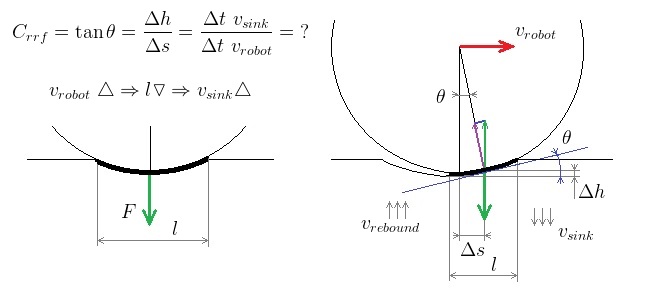
When you drive on the rigid surface of the platform there is no indentation in the foam, but similar deformation happens with the rubber rollers on the omni wheels.
I feel like the number of wheels is not as important as ensuring that the surface of the rubber rollers on the wheels is clean and provides the best possible grip on both foam tile and the platform surfaces.