Hello,
I’m a professor just starting a new VEXU team at LeTourneau University. What advice do y’all have for materials? Should I buy a couple of V5 super kits to get started? I’m not sure how much of the pro components teams end up using (especally the motors and gearboxes). Thanks
VexU is a little different from Vex V5 in general. You are allowed a lot more plastic, and different electronics that are not legal for high school use and more.
A good start would be the super starter kits, but you will need parts that are not included in the kits.
For example, a decent kit would be: VEX V5 Competition Super Kit - VEX Robotics
In addition to this kit, you should also buy:
-Extra Wheel Sizes like 2 inch(for odometry), 2.75 inch wheels, and 3.25 inch wheels, and this includes their omni/traction variants.
-Sensors like IMUs, Rotational sensors, Vision sensors, extra brains/ batteries, power cords and other electronics
-Motors(A lot of them) and cartridges for motors, mainly blue 600 rpm cartridges and some red 100 rpm cartridges. (Motors already have green cartridges when you buy them)
-Thin OD spacers
-Nyon Screws/Nuts for weight reduction
And likely more stuff that I dont have labeled. Also, make sure you buy a field so you can test the robots you make.
Im sorry if this seems like a lot and not thorough enough, but I am a Vex V5 high school team, so I dont know everything about Vex U. Good luck!
Howdy,
This is highly dependant on how your team operates. Personally, you will be looking at around $3-4k per robot, so given the price I would actually advise getting your team a couple of Bambu Lab 3D printers, a Fusion 360 License, and to either use a pre-made VEX Fusion 360 Library that can be found here: VEX CAD Fusion 360 Parts Library 2.0.0 Release
In addition, in VEXU essentially all VEX Pro products (excluding electronics) are competition legal in VEXU so you can search the site there for cool verahub wheels or metal frames too: Home - VEX Robotics
Additionally, pneumatics are fair game too. As long as it conects to the original VEX solenoids, you can you any type of pneumatic cylinders, fittings, etc. An example order form can be found: Pneumatics | Purdue SIGBots Wiki
I would highly suggest looking at this wiki to start off learning about VEX: https://wiki.purduesigbots.com/
As a VEXU team, I would strongly encourage to download CAD models for the season and developing the robot in Fusion 360 or some other CAD software, and develop your robot in the CAD software before actually ordering components. However, getting a super kit first helps get a first general understanding or foundation on how to start understanding the patterns of how to build a VEX Robot and its limitations.
On another note
Because you are a new team, programming has its sophistications too but thats for another day
A bit off-topic but if you need a good coding foundation you will have PROS and VEXCode. As a VEXU team I would highly encourage PROS. The coding community in VEXU primarily uses PROS because of its professionalism and depots, however I myself find myself more comfortable with VEXCode as I feel like it’s closer to the hardware on a software standpoint. So coding is fundamentally something your team can choose or switch over time.
PROS First Time Users Guide — PROS for V5 3.8.0 documentation
A well-supported community-driven library LemLib for PROS can be found here:
LemLib documentation
If your team plans to use VEXCode, I would recommend JAR template:
About JAR Template | JAR-Template
I have also made my own library, WhoopLib, that works for PROS and VEXCode, if you would like to start understanding and open doors to more fundamentally complex coding:
My tutorial for coding your own PID for beginners: VEXCode PID Tutorial
@anon4126930 The old VexCode is now Vexcode Pro V5 and is end-of-life. The replacement for Vexcode Pro V5 is the VEX VS Code Extension. JAR Template does not work for the VS Code extension.
Big ol’ air tank.
JAR works fine, you just can’t import it. You just have to manually make every file and copy and paste the text.
OP is asking about materials, so I feel like it wouldn’t be fair to stray too far from topic. Usually software quality goes hand in hand with hardware quality, which was why I pointed that out as a spoiler.
Even though someone else did release the VEXCode extension, I am unsure if my comment about it needing to be an extension influenced their decision to innovate their coding infrastructure:
Continuing the discussion from What do you use to code your robot?:
I have to admit, I do tend to be brutal with my comments and that’s largely due to my disabilities. However I am incredibly grateful for the path VEXCode is going.
As for the hardware point,
This robot is absolutely insane and I have seen it first hand. That thing is HUGE.
The Q&A outlawed PYRO descore😭
Thanks for your time. I should have noted that I’ve been coaching high school V5 teams for several years, so I know that platform. We also have 3D printers and Solidworks CAD available to students.
Thanks @anon4126930, We have 3D printers and Solidworks CAD available for students. I appreciate the links and will check them out further. I’ve been coaching high school VEX for several years, so I understand that platform. I’m just not sure how much of VEXPro stuff we will need?
If your organization has the funds, you could do a “two of everything” to let the students experiment with what’s available.
I have once built a VEXU robot with regular VRC C-Channels and found that the VEXU robots have a LOT more torque and power and may bend longer C-Channels during matches.
Realistically, I would recommend starting out your structure with CNCing sheet metal with 3D printed components structurally squished between the inner and outer sheet metal for each side of the chassis.
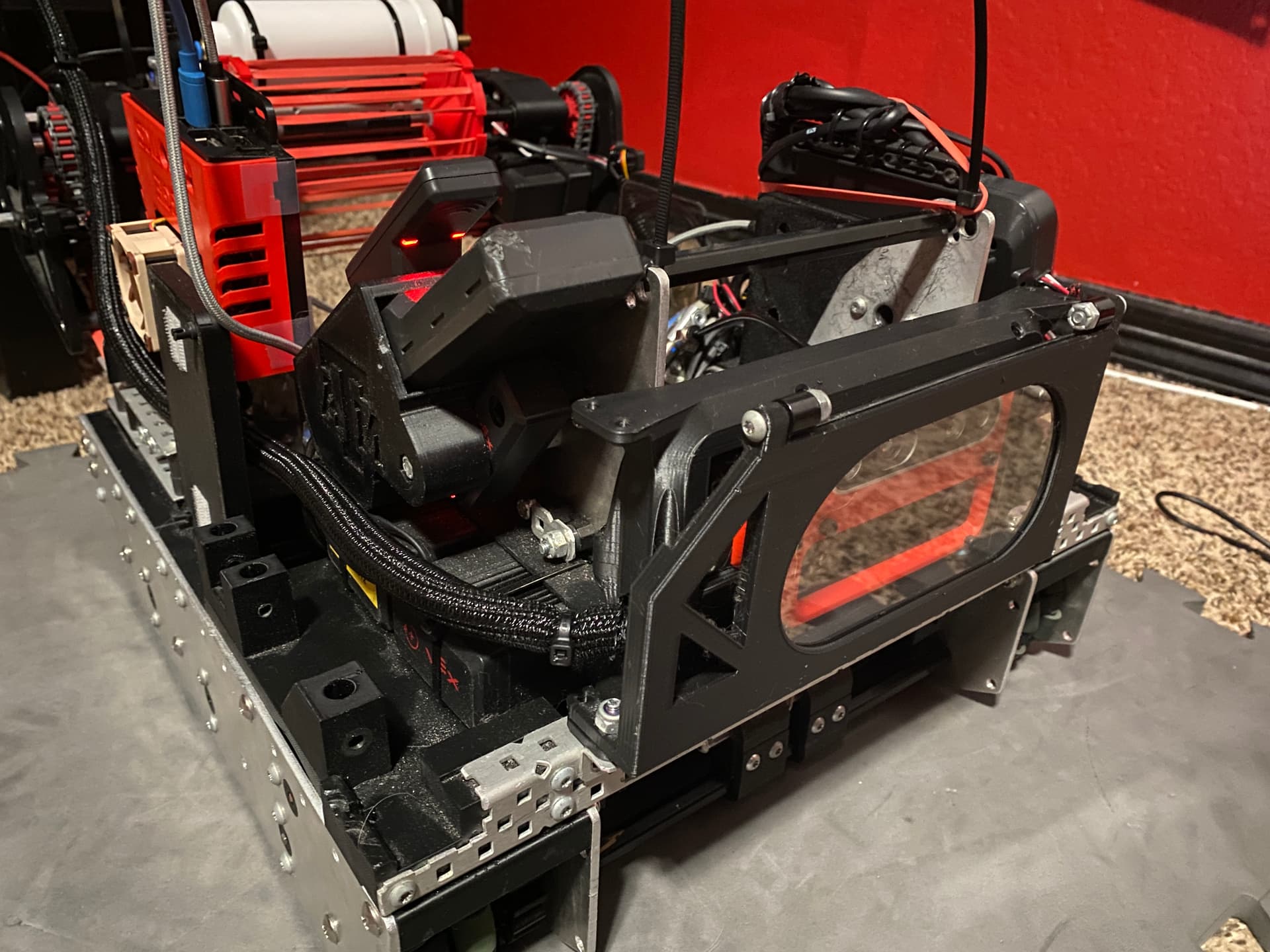
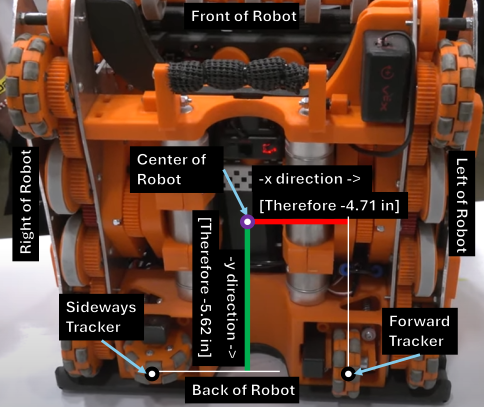
As you see, most of the VEXU robots tend to be simplistic, relying on 3D printed components and sheetmetal for the majority of the structure.
Are either of those yours?
Top picture is WHOOP, bottom is WISCO. First picture was a robot I worked on while I was in Aggie Robotics, while the bottom was from a FIRST Updates Now video on WISCO. Both robots were shown publicly at VEX Worlds.
The top robot was part of WHOOP, who fought against WISCO at VEX Worlds Division Semi-Finals that season. The second robot at the bottom is part of WISCO, who beat WHOOP in the Division Semi-Finals and later won VEX Worlds at the Dome for that season.
I am not competing anymore. Here is my explanation
I respect these organizations, however after competing in VEX for 8-9 years, it gets boring, repetitive, and stale. You start to question “Am I enjoying life to the fullest, being stuck in an overly-controlled apparatus that feels like they ask for more and more of your money and time and at the expense of your academics?” For the first couple of years in VEXU that was fine. But after a while, if I don’t enjoy a competition that feels like it’s not living up to the higher and higher expectations, then it is treated more as a drug or, in lighter terms only a passion, and less of an educational utility that advances or encourages innovation.
I had this same issue in VEX as well, but not as potent back then. More often VEXU struggles to encourage innovation, with more rules added to inhibit creativity than encourage it. It is like playing a videogame that brute forces you to play in a particular playstyle instead of enjoying your own way to play.
Ultimately the only way that highly creative design is allowed is if a VEX or VEXU team hides the unique robot design from public view until they bring said unique robot to the VEX Worlds stage, gambling that the end of the season is near to strong-arm a psychological ultimatum to letting the robot be allowed to compete. This RARELY works, and traditionally is only approved if it makes a GDC member smile from the design’s wit. This is also highly reputation-based so if you are not in the positive public favor, you are at a disadvantage in the gray area. It seems more like a crowd control deicision than an actual creative-endorsing one.
These reasons and downsides are outshined at the beginning (VEX Robotics) by learning opportunity, but there is not as much learning opportunity in VEXU once you start to recognize that you can build a robot for half of the cost by omitting VEX and learn much more about practical real-world applications outside of the V5 apparatus through SLAM, ROS, etc. solutions. That was why I released WhoopLib, to try to bridge that gap and try to involve more real-world applications. But gosh, at that point I might as well ditch VEX due to its inhibiting and over-controlling chamber.
huh?
Wow, that’s impressive. Are those robots using VEX CIM motors? It looks like VEXU requires use of only V5 motors now? When you 3D print those gears are the teeth as smooth as VEX gears? Or do you need to file them in a special way?
These teams are really impressive and I am grateful to have partaked in WHOOP.
In VEXU, all teams are required to use regular VEX V5 motors, however there is a small exception that other non-VEX motors are legal if they are used solely for sensors.
Most 3D printers from Bambulab typically don’t need any post-print procedure. The quality is typically high enough where it “just works” so long as there’s not too many teeths and the tolerances are laxed enough.
PYRO
PYRO - Likely would have not been allowed to compete using air to descore during games if they introduced it before they presented it to VEX Worlds. The vast majority of regional referees likely would have disallowed such a design if it had not first been allowed on the world stage, using “common sense” as the simplistic reason, maybe even possession itself, but safety as the ultimate reason. In fact, at worlds the design was escalated until approved by the highest member of the committee who allowed it because it was cool, unless I was mistaken. Therefore, reputation may play a role as well.
Essentially, the social dillema of public perception was key to being allowed or not. I do not have a reference but PYRO stated themselves that they had to keep the robot under wraps until VEX Worlds for spin up to prevent the design to be barred or illegal. By first giving it world-stage acknowledgement, it made a prescedent of actually being legal, due to a ‘burden of proof’ argument that if it was legal at Worlds, it should be legal regionally too. If this were flipped on its head and first introduced regionally before VEX Worlds, the concept would have been shot down.
Because they introduced the robot design at VEX Worlds for Spin Up and not before the World stage, the prescident paved a ‘legal acceptance’ of such a design in VEXU for the season thereafter:
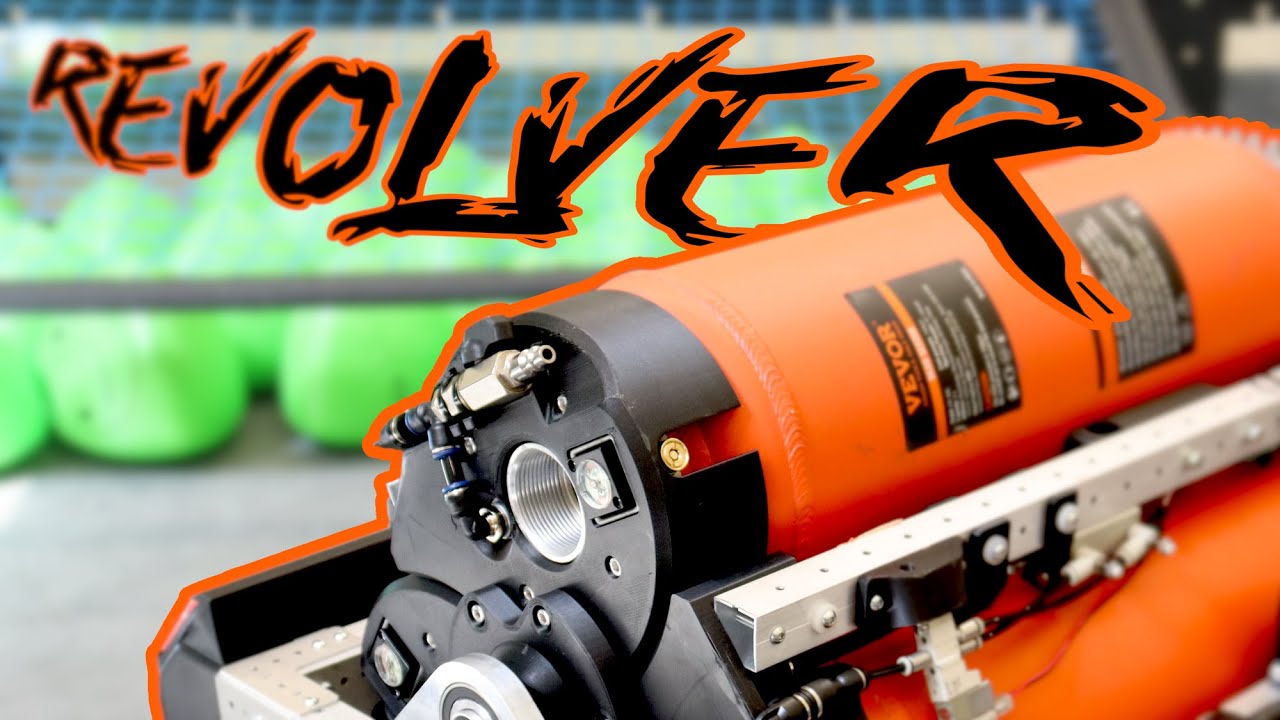
Unless I am getting the message incorrect… Based on how VEX Worlds is ran, I believe that the only way creative designs beyond the scope of VEX’s limitations are allowed, bending the rules for said team’s favor, is when the criteria is met:
- The team has a reputation
- The team waits until to introduce design at VEX Worlds first to create a “supreme court” like prescedence for future events to adopt the creative design
- The design is witty enough to allow that one-of-ten-thousand team to be permitted to use it
Honestly, I believe that this is perfectly fine at VEX Worlds. What bothers me is that I feel like regional events take VEX Robotics too seriously to a point where it’s hard to find fun in it. Robotics is supposed to be fun, enjoyed by many. Not by the small percent who get exceptions.
My thoughts
Based on above, I personally believe that VEX should start “peeling back” and embracing more creative designs. I feel like most designs in VEX nowadays seem too formulaic and inspired by already made concepts from previous designs from almost two decades of robotic creations online.
When compared to the average F1 race car.  I’m often gobsmacked by some of the HS V5 robots, but most of the VEXU ones are on a much higher level.
There have been rules about damaging the field elements, Pyro would fall under that category.
I’m a fan of the GDC, they have tight constraints on game design that it needs to be playable / winnable by 6th graders and college seniors. That is a pretty tough box to fit into. They have managed for the last 20+ years, but recycling ideas is going to happen no matter what.
I’ve offered to the GDC two ideas, 1) 4 cameras pointed at the field and displayed on a large monitor in a split screen. Teams turn their backs to the field and play the game looking at just the monitors. 2) Cameras are mounted on the robot and the same driver setup.
(This isn’t a new idea, there was a “visit a planet” robot competition where you placed your robot in an “airlock” (which acted as a sizing tool) an you drove the robot around on the planet. I think there were two versions, one where it was “real time” and another where there was a multi second delay to simulate round trip radio times. )
Good to know. Let me stress the importance of having a larger supply of assorted fasteners. From what I’ve seen of VEXU teams, they have gone to great lengths to create portable / organized storage for everything. Teams go on “event sweeps” where they go to multiple events on an extended road trip. Having everything with you is a challenge.
Honestly, you are absolutely right about that. Maybe I am too used to Mythbusters shows where Adam Savage and Jamie Hyneman thought of the most out-of-box and creatively accelerated solutions that are exciting, and you can see how much fun they have with the freedom to even build such extravagant experiments. However, I believe my perception of creativity may be different than other people’s.
With VEX, the large issue I see is it feels too controlled. If we look at playgrounds, there are playgrounds in the Berkeley Marina called “Adventure playgrounds” where children 7+ are given nails and wood and, with supervision, they can build and practice woodwork.

This is indicative that there exists a system where children can embrace freedom instead of having to continuously be reminded of the controlling limitations and stressors at home. When I see VEX Robotics in 2025 with an almost staggaring 150 page manual when, during its early times, was merely 20-30 pages. Sure, it has appendices while the earlier manuals did not, but that is still WAY too large for a competition for high schoolers.
Given that the cost of an entire field is traditionally $500, all it takes is one season where they do this and allow teams to re-use the same tech for the next 5-15 years. Essentially, there is quite literally merit to this concept financially without being a burden.
I have once did this before, however a LOT more like a “planet” and less “real time” until I found out a way to make it “real time”. Back in middle school we had LEGO Mindstorms and we program a robot to accomplish tasks in a literal sandbox. Being the annoying one of the bunch, I teamed up with a second team and we worked to create a robot that is a controller and send bluetooth signals to the robot in the sandbox. The “program” became a loop constantly listening for signals and mimicking the motor rotations of the controller so when the controller motor spins, the robot motor spins. Those were fun times.
Realistically, VEX Robotics rules are too bloated and rigid, and in one hand creating extremely rigid rules telling everyone how to play the game, while in the other hand giving the illusion of freedom by only providing a limited set of options on how to play the game. The only difference is the shape or size of the design, but the few who embrace creative design get punished traditionally by the rigid rules VEX offers. I am not talking about the micro-creativity like creating a passive intake when the majority of people have active intakes, or like using a PTO when most people go for direct drives. In my eyes VEX feels like going to a business and telling people that I am creative for wearing a striped red and blue tie when the everyone else has solid orange tie. It’s a small creative gimmick that does not fully embrace creative passion itself.
The only time where it was very close to VEX embracing creativity was in 2017 Starstruck where there was a robot that was a wall bot with a net, there were teams with dumpster designs that hoarded and dumped at the end of the timer, or a team with a robot that turns into two, all in the same season. Teams have the capacity for a non-linear path of achieving the same level of success as any other teams who do “meta” designs. And that shows to me the importance of seasons that are multi-dimensional in opportunity. But even then, I highly doubt that these designs are the forefront of creativity. There are so many other creative designs that can be expressed or discovered, if VEX simply starts to step back and lets the competition discover new things.
Imagine if one season VEX added a laser-tag like feature that disables a robot if it were shot, instead of the old standard of put object in object.
Imagine if one season VEX built two one-way bridges between two VEX fields and the events were 3v3 instead of 2x2.
Imagine if VEX added AprilTags to allow one minute autonomous periods with precise movement and embrace programming for a season.
Imagine if VEX actually embraces 3D printing instead of actively restricting it. Imagine how much teams can save to afford opportunities for VEX fields with more features.
Imagine if VEX genuinely cares about teaching by changing the games, instead of sticking to a formula year-by-year of what games should be.
These are only some ideas I can think of from just a couple seconds of thought. And I’m going to be really honest. I don’t care if the limitations of the few are that a field may not fit in a room. Compromises can be made. But most importantly the vast majority of people would be much happier to see VEX actually try to not only embrace innovation, but innovate themselves.
I am sick and tired of the lack of innovation from a competitive system that preaches that it is about innovation. I respected VEX for a long time, but the competition environment is staggaring because they are afraid to try new things. They could give FIRST a run for their money if they simply try. But they don’t.
Wow. That is an amazingly detailed and beautiful book. You bring up so many great points! Just wow.