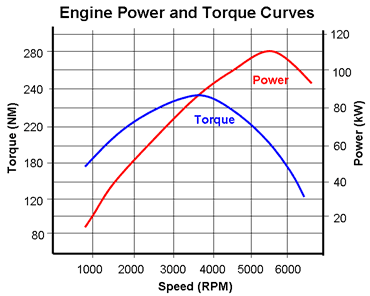
Okay, this might be a stupid question, but I’ve been looking at the torque and power curves of the 5.5W motors and 11W motors, and I have a question.
5.5W curves (from Vex)
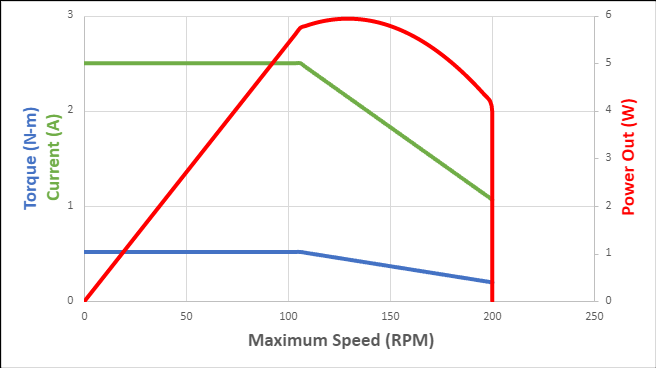
11W curves (also from Vex)
In both of these graphs, the output power will drop after around 60-70% of the maximum RPM. This is also where current and torque drop. Is there a difference between running a motor at the maximum RPM, or running it at the maximum power point and using a theoretical gear ratio to attain the same RPM as the motor’s maximum RPM.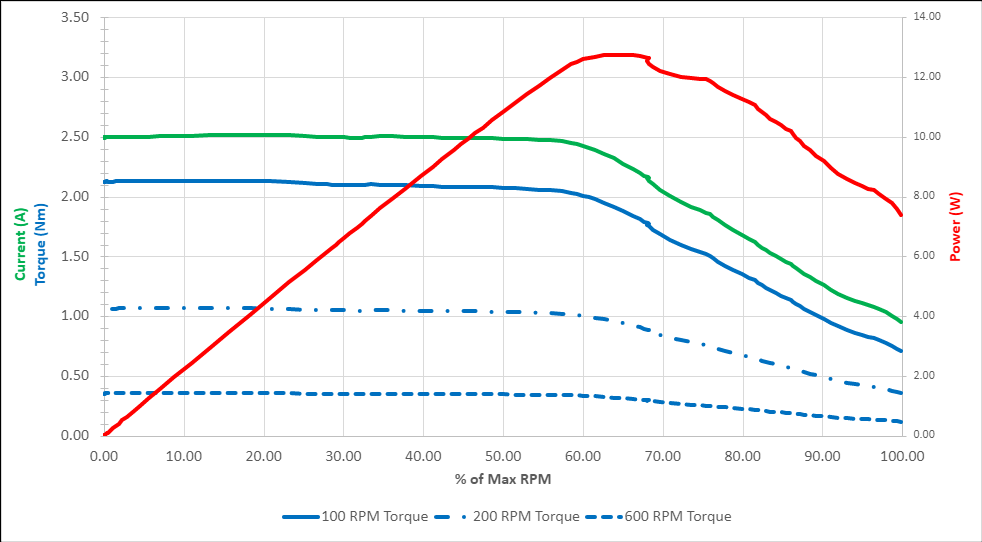
I know there would be losses due to the gear ratio, but would the losses be negated by the increased output power of the motor? Lets say you have 2 wheels being spun at 600 RPM by 2 sepreate motors. One is a 1:1 ratio with a 600 RPM motor spinning at the maximum RPM, and the second is a theoretical perfect gear ratio (the exact reduction) that, with the motor operating at maximum power, current, and torque, spins the wheel at the same speed as the first motor.
I don’t understand any of this, so I’d appreciate any input. Thanks!