It almost seems like you may be pushing these little motors outside of their comfort zones. Yes, these motors are capable of outputting a consistent power of 11W. But just because you can do something, does that mean you should?
Check out these articles to learn a bit more about these motors.
After you’ve read those articles and you might understand a bit more about the 11W Smart Motor, consider the following.
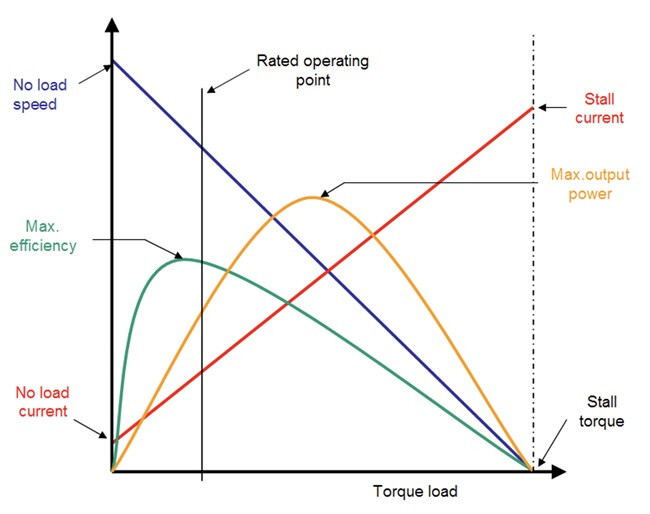
The image below is a standard DC motor performance curve. As you can see max output power is further along the graph than max efficiency. When running at max efficiency, the motor will create the least amount of waste heat. But at max efficiency you aren’t getting the most power! That’s a bummer! So let’s crank it up to max power output. Notice how much less efficient a motor is at max output power?
Now let’s compare to an 11W Smart Motor performance curve I found. The engineers and programmers that designed this motor pulled off some voodoo to make using these motors easier for the masses. They basically made you have to worry about less! But unfortunately, here on Earth, we are limited by the laws of physics. So even though stall current and stall torque start off the same, they will eventually drop off. So they let you worry about less but you still have things to worry about.
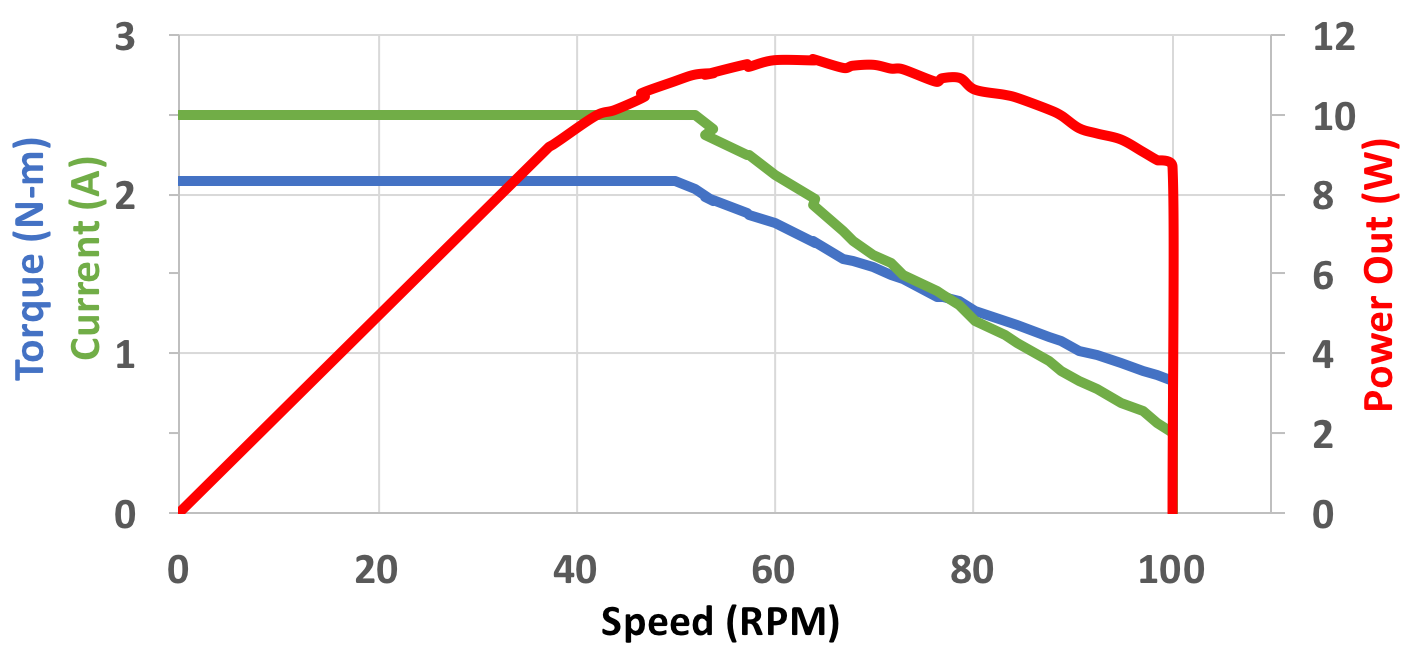
You might want to try running your motors a bit more effeciently if you are trying to solve the overheating issue. You might want to ask yourself, “Do we really need this motor to run at max power?”
Or, you might just have to accept that if you want to push it to the limit, you’re going to create excess heat.
Just as a side note, this is not an issue with the V5 motors. This is an issue with every single electric motor in existence. No amount of ventilation or heat sinks will ever make a motor run the exact same all the way across it’s performance curve.