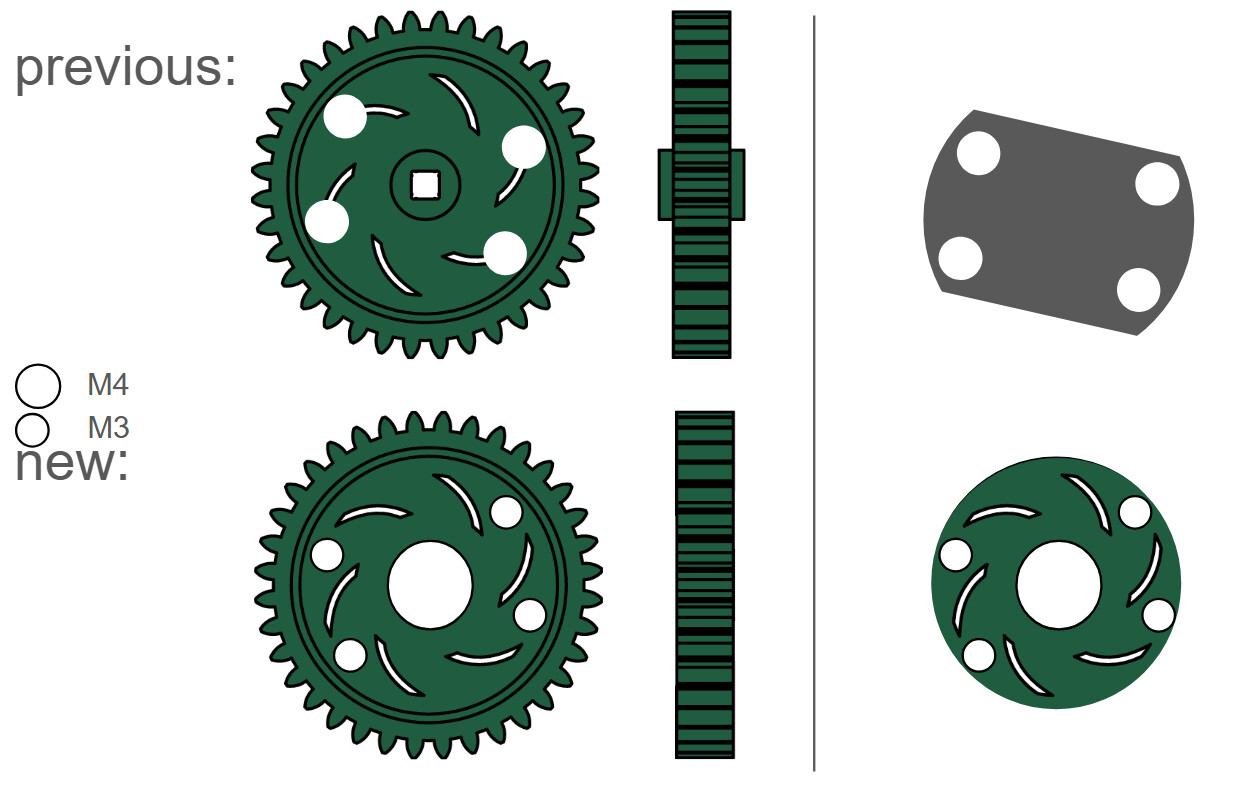
this is big-brain stuff holy schmoly
see i just sorta… like… do precise inputs at 100% speed… because im insane crazy bonkers like that…
but it’s impressive how much crazy intricate design is done here. this is phenomenal. i dont holecount guys i swear trust m
It’s essentially the following, except think of the use case being for a car to ensure that when the car steers left, for example, the back right wheel can spin faster to “keep up” with the back left wheel essentially:
In the differentials above, they do the exact same thing but just use straight gears.
I am unsure the application for VEX Robotics unless someone plans to make a robot car, or if someone has some other creative ideas using it.
There is somewhat a contradiction between those two statements within a set VRC legal parts and materials constraint.
Low strength bevel and pinion gears are not that strong and metal pinion gears would introduce too much friction when used with vex standard axles and nylon bearings.
They may be okeyish for output of the car rear axle high friction limited slip differential, but competitive VRC robot never use that setup.
If you need to use differentials for some mechanism other than drivetrain, then having small metal pinions without low friction ball bearings would, probably, introduce prohibitively high amount of friction to make it practical. You would be better off just to use separate motors while dividing output power and controlling speed in software.
If you still want to use mechanical differential then one possible design would be to gear up the power from the motor (or use high speed cartridge), send it through low strengths but properly lubricated and aligned differential at high speed, then gear it down to appropriately strong torque for the output. This may allow you to keep your bevel gears based differentials from wearing out, but will require extra gears.
Wouldn’t this cause it to wear out faster and have more friction?
Theoretically yes, but in my experience mechanisms under high torque tend to have more issues than those running at high speed. By running the differential at a high speed, you can reduce the torque acting directly on it, which makes the gears less likely to get damaged.
I can’t remember the last time I saw a flywheel damage a gear, but my team replaced the gears on our catapult at least 3 times during Spin Up.
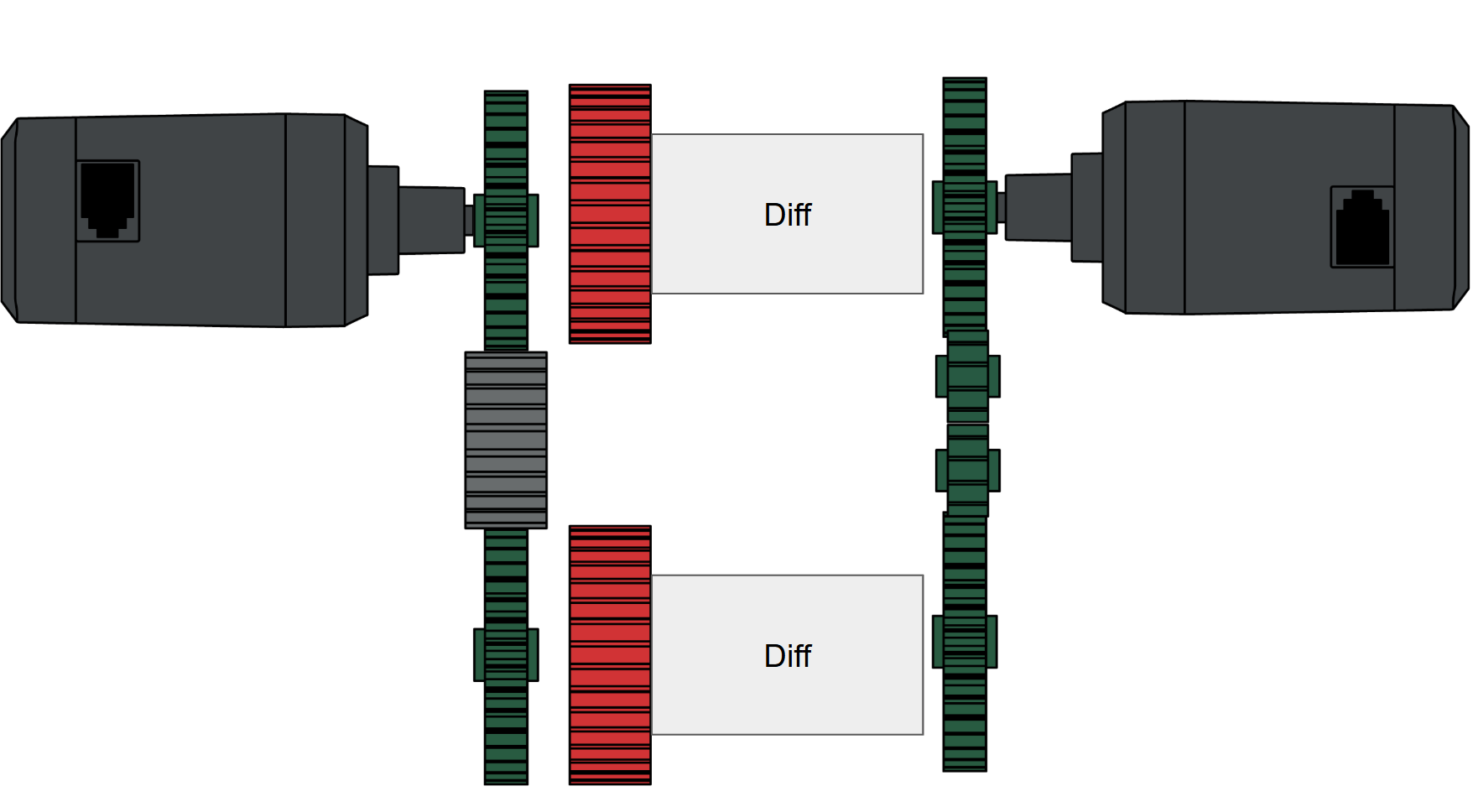
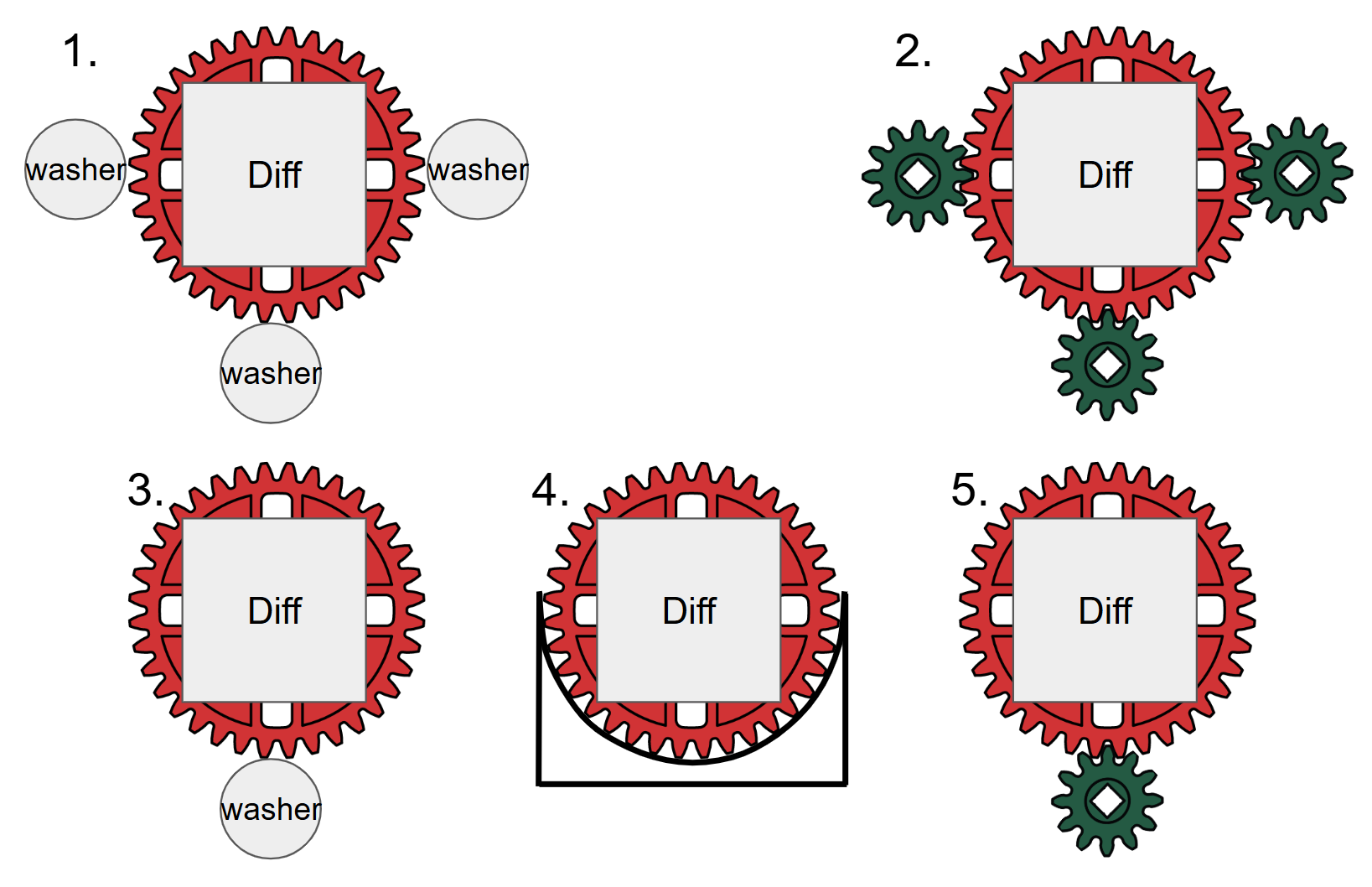
which one you prefer
- #1
- #2
- #3
- #4
- #5
- don’t add anything
0
voters