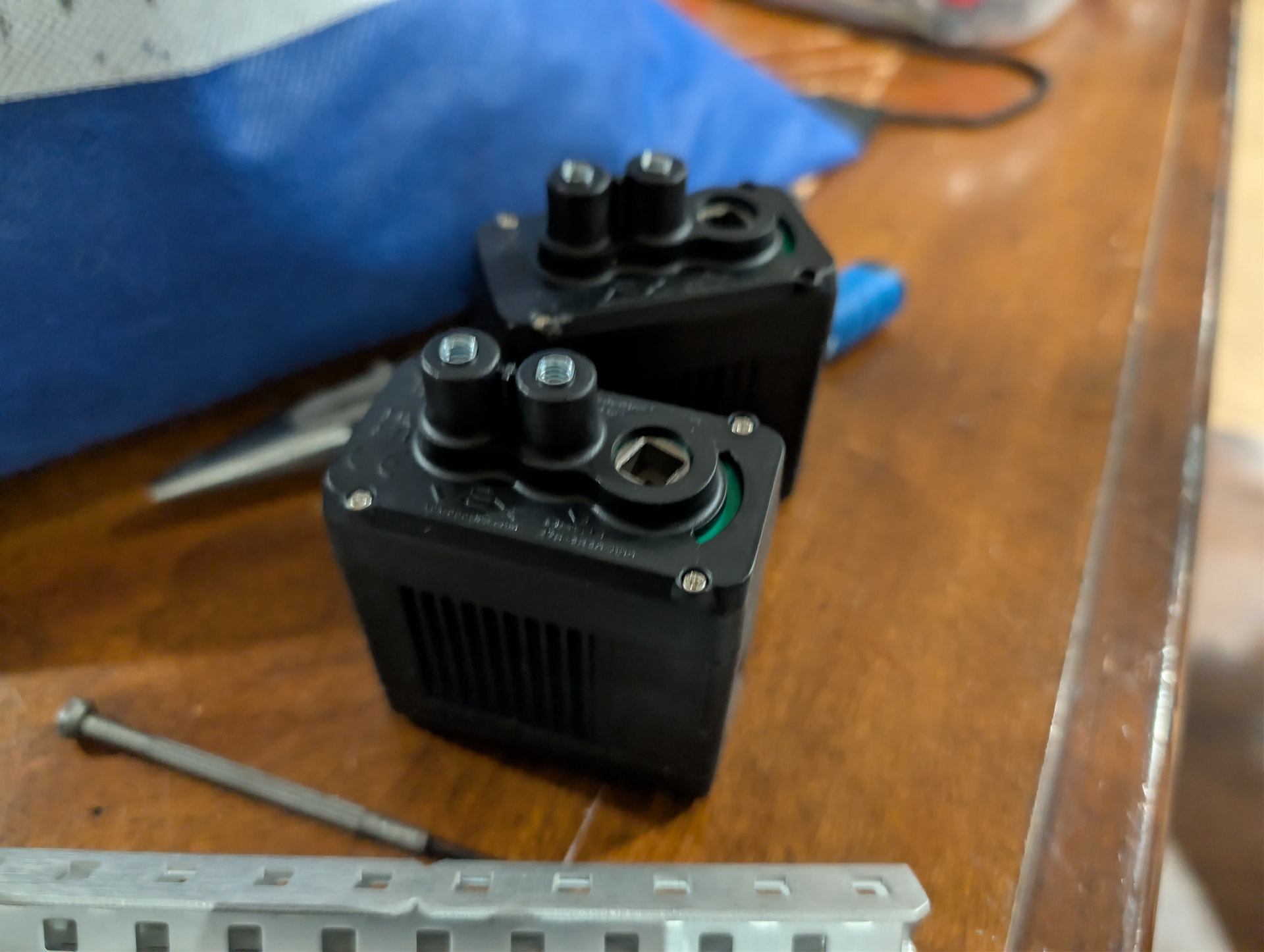
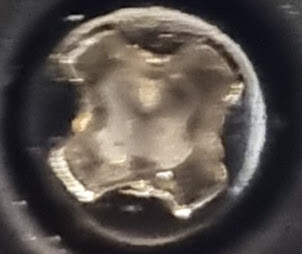
Unintuitively, a larger screw driver can be the better solution – it will be able to catch the very outer bit of the Phillips cross. Have the motor on a table like in your picture, and press down very firmly while turning. Screws strip because not enough pressure is applied down into the screw head to overcome the mechanical advantage of the inclined plane of the screw threads. The driver rises out of the head and strips the formation as it loses compliance.
Be aware there are hex head replacement screws that are more difficult to strip and are competition legal.
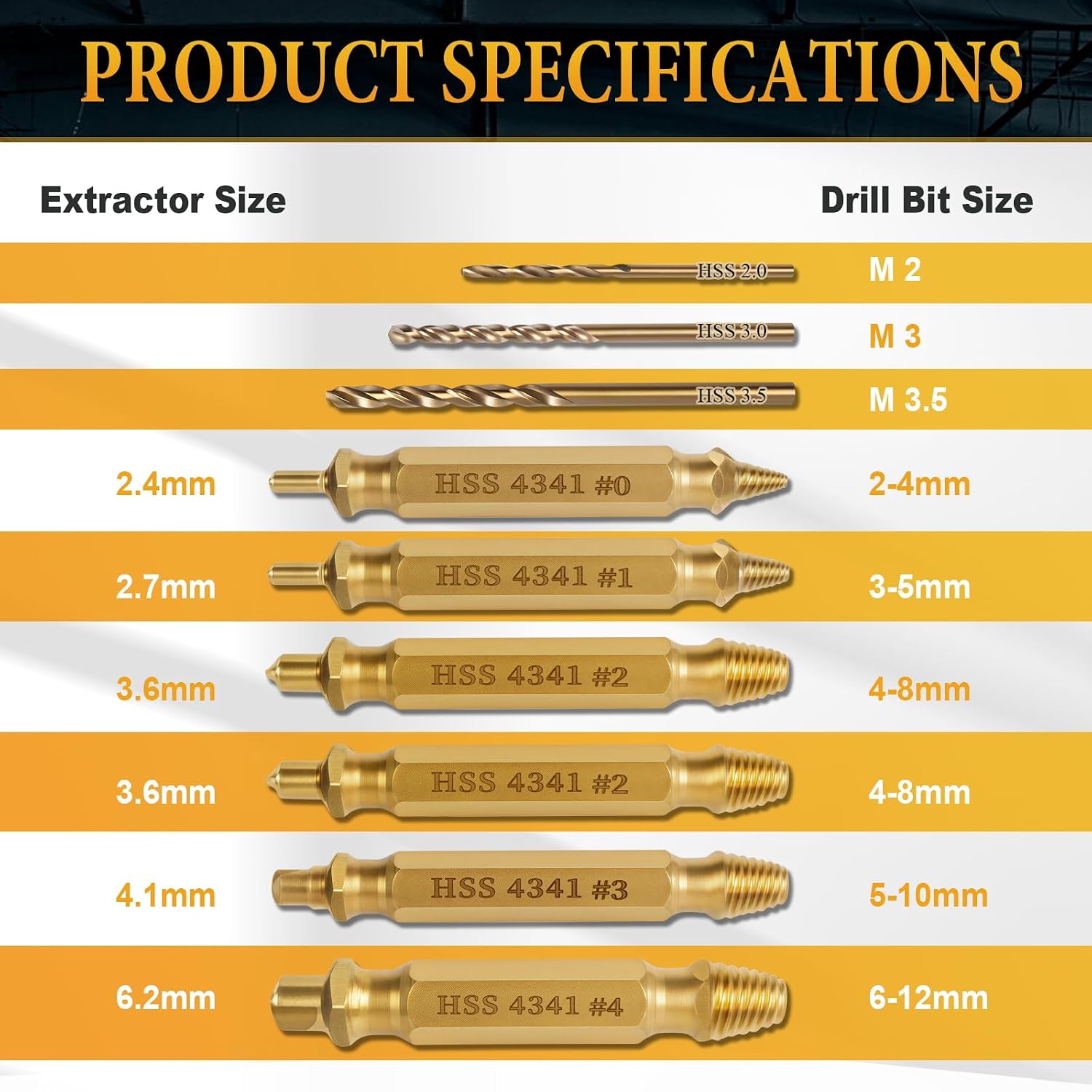
We have this kit to remove damaged screws. Damaged Screw Extractor Kit, Easily Remove Stripped & Broken Screws : Amazon.co.uk: DIY & Tools Looks like ours isn’t sold 7 years later, but there are plenty like it.
Whatever screws you use as a replacement, test the tip of the screwdriver in the drive (depression in the head of the screw). Hold the screw in one hand and the screwdriver in the other. I actually try to wiggle the screw relative to the driver because it turns out easier. It shouldn’t be able to move/wiggle even without downward pressure. If it moves, you’re using an incorrect or bad screwdriver, or the screw is already damaged, and you should replace it, especially ahead of a competition.
Personal experience: I always get torx/star-shaped drive heads when I can because they’ve proven the most robust. I avoid allen/hex heads like the plague. Cross head screws are fine if you get the right screwdriver and take care with applied torque. The screws in the motor cap don’t need to be cranked. Flat slots are a nightmare in real life, especially when you’re in a hurry.
I have never seen screw extractors small enough for those small V5 motor screws.
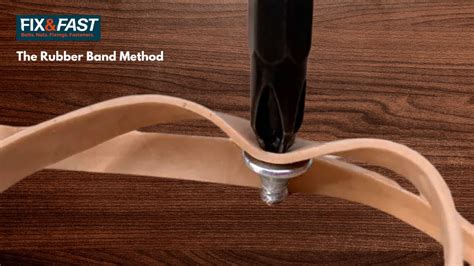
First, try pressing screwdriver into the screw through the rubber band:
But, if everything else fails and screw head is hopelessly stripped, consider drilling through the screw head with a drill bit slightly smaller than the threaded diameter. Then, after screw head falls off and motor top is free, use pliers to remove remaining screw bodies.
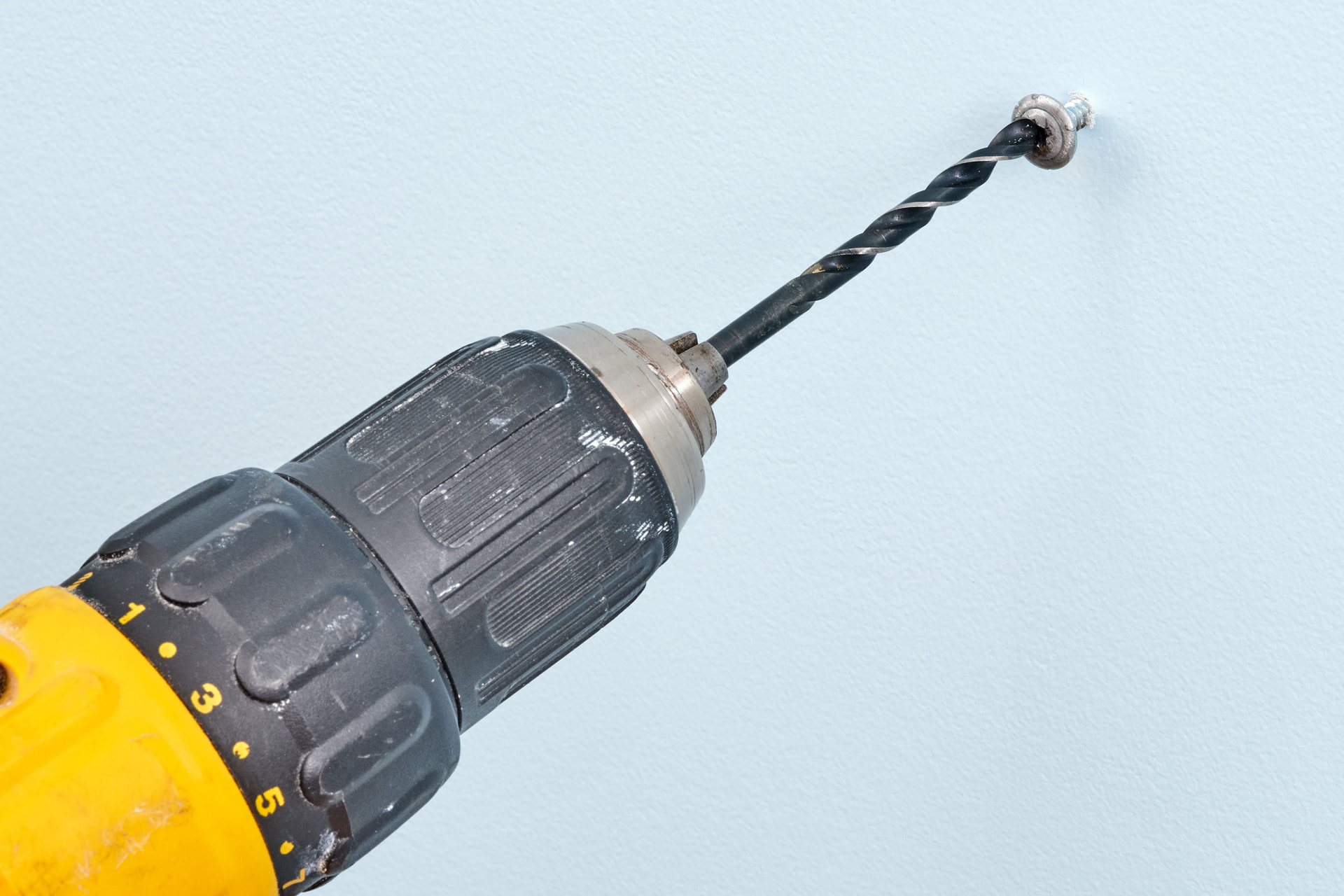
It is preferably to use proper drill press. With handheld drill it would require a lot of skill not to damage the motor and not to break small drill bits nesessary for that task.
You’re absolutely right that the unsympathetic unscrewing bits don’t go that small. I should have dug the kit out before I posted - I would have been reminded that the kit has these tiny drill bits. They work at normal power screwdriver speeds, but a drill press would be less fraught.

It looks like OP used a watchmaker’s screwdriver. Something with a decent sized handle would help to maintain the drive properly.
Apologizing to the mods for the extra traffic, a correction to my comment above: the kit does have at least one extraction bit small enough for the motor caps. In fact, I’ve just learned after all this time that you’re supposed to drill a pilot hole for the extraction bit. I’m feeling dim for not recognizing the opportunity when an extractor failed. And of course for not reading the instructions.
Bigger extraction bits did the trick for Vex M4 screws (and stuff outside the vexiverse) without a pilot hole. I just compared the biting part with the screwheads and picked one. They were really easy to use with cross head vex screws.
For small screws like these, which are M1.6(?), I guess you want to bear the torque at as thick as possible a section, so you drill to allow the conical threaded part to sit entirely within the material of the screw.
Maybe the 2mm extractor, which is relatively much bigger than the screw shank, would bite the motor cap screw head itself without a pilot hole if it’s not too thoroughly mashed.
The drill press sounds good for the pilot hole. You’d want to drill it without dislodging the head if you’re going to proceed to use an extraction bit. That would be a central 1.3mm hole in a 1.6ish mm screw shank if you have to go below the head. Challenging/unlikely. Maybe worth trying to avoid the risk of damaging the cap or the inserts with a drill that spans the shank to release the head.
I think I’d feel more comfortable using the Dr#20 bit than a 1.3mm drill bit per se unless it would work slowly and presumably pressing fairly hard?

Here’s a depiction and description of screw extraction using the burnisher (not a drill as I had thought) and then the extractor.

The outer limit of the cross in the motor cap screws looks thin, so I guess you’d be looking to keep some of the incursions to match one of the extractors.
Here’s an article on screw extraction from an electronics distributor that seems thorough. Worth reading through, I think: