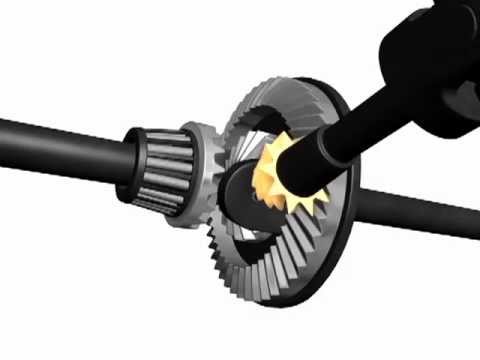
This was an experiment to see if you could build a Starstruck robot that will score stars, cubes, and perform high hanging all with the power of a single motor… Actually there are total of three motors: two powering non-symmetrical holonomic drive (it just turned out this way) and a third motor powering linear lift and dumper (using a differential):
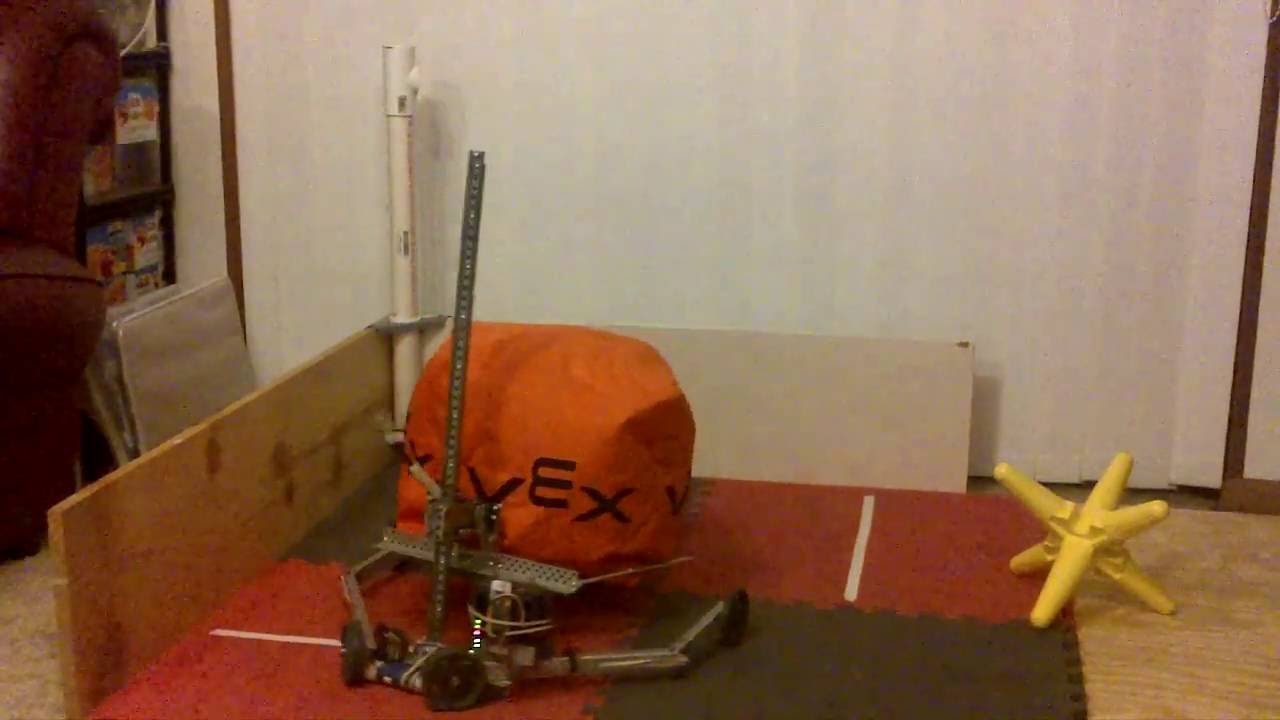
From the power standpoint - the experiment was a success. One motor could easily lift both game objects to 25" height as well as performs high hanging. While nobody expects it to be fast, it is not very slow either.
There are, obviously, numerous problems. While robot could decently handle stars, it is difficult to keep cubes from falling off the forks. The frame is not well balanced and, with the total weight of just 4.5 lbs, back wheels have difficulty generating enough traction when carrying a cube. Aligning for hanging didn’t have to be this difficult, etc… In any case, the time would be better spent improving designs that have access to more power. 
The main highlight of this robot is differential:
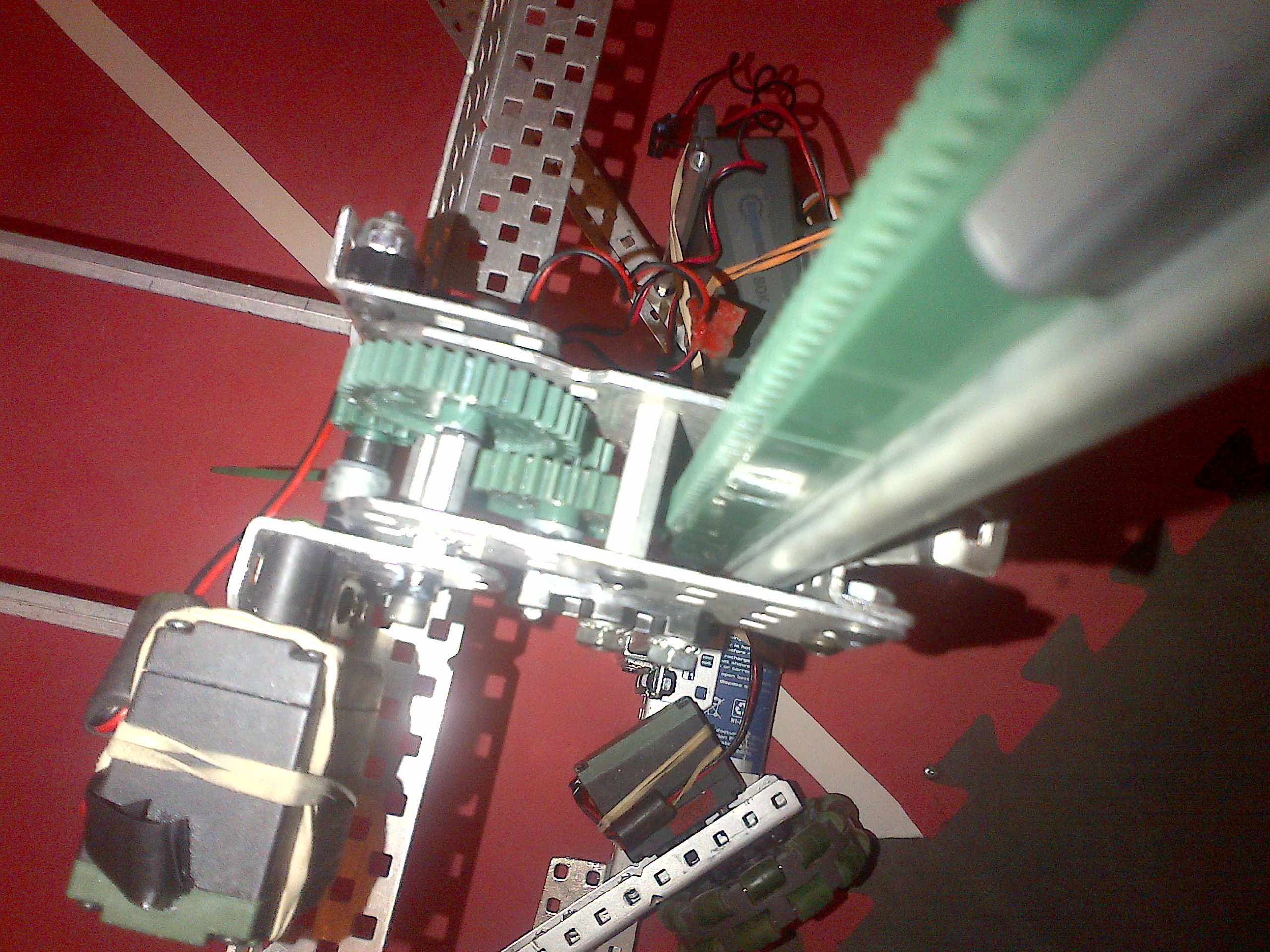
It splits the power (from the force geared motor) between linear lifting and flipping (dumping) motion. Total spread between two outputs of the differential is 9x. Lift is geared up 1:3 to be faster and the arm is geared down 3:1 for the higher torque that is required for the flipping.
Essentially, motor is mounted on the arm and has 12T pinion connected to its output shaft. With the pinion it tries to climb onto the 36T gear. If there is no load on the arm it will flip first, hit backstop, and then 36T gear will start rotating and, in turn, driving 12T/36T compound gear that interfaces rack gears.
If there is a game object on the arm then flipping would require more torque and it will be easier to start turning 36T gear first which will move the carriage up. Once it reaches the top and hits backstop then flipping will be the only available motion.
There are several types of differentials that could be used not only to split power from a single motor into two destinations, but also to combine the power from two independent sets of motor (driving separate motions) when high torque is required.
Finally, while this robot was never intended to go to a competition, here is a proof that it could fit into 18" cube, in case anybody would doubt it