Respectfully, for those who still think that statements like this are a justification for requesting that 3D printing be made legal, I am concerned that you have not read @Jon_Jack’s post above, or listened to my comments during the RECF Summit last week.
You are absolutely correct that most teams will not use a $2000+ printer, or print anything more complicated than battery clips. But you know a small handful will.
That is exactly our point.
We exist in a competition ecosystem where a privately-funded team with a 5-figure annual budget competes in the same match as a rural team who had to run a car wash fundraiser in order to afford their field element kit. These disparities will naturally introduce some level of unevenness - currently, you see it in areas like like pneumatics usage, advanced sensors, drive practice time, etc.
Deciding where we want to draw that line is the world’s biggest example of a slippery slope. Things like access to advanced coding (PROS, anyone?) or elite practice facilities are directions on that slope we have chosen to accept; opening up 3D printing for all VRC teams is just not one which we are going to open at this time.
As we know there are inherent differences between teams, there are also teams that will spend $200 on a sensor that many others simply can not afford. I think that it is well known that we do not play on an even playing field, but we do play on a field that allows teams that work extremely hard to excel. I see 3d printing as a cost saving measure and a learning experience. I respect the rules and play within them , but always hope for more.
That 3D printer argument would make sense if there was a motor penalty for pneumatics or adding each GPS sensor reduced total current for the motors by some value.
But all those expensive options have no engineering penalty whatsoever.
So, if I cannot afford neither pneumatics nor GPS sensors, I already know that the playing field is heavily tilted against me. And I have very little chance to beat a rich team of the same skill level.
So, having a 3D printer option is not going to change the chances of me winning that much, but could save me some money and make VRC program affordable to more teams with tight budget.
Yes, I would much rather buy an ender 3 and make money and be able to use it for vex than buy a gps sensor just so I can compete with the teams that get grants from nasa and funding from the government. As I am a private team we cannot receive grants or donations or many cash sponsorships. A 3D printer can open up a lot of oprutilities for a team and even allow them to maybe be able to pay for worlds (as why 319 was not at worlds 2021)or go to a sig event.
my biggest problem with the affordability argument against 3d printers is that you can use a 3d printer (yes, even an ender 3) to make just about anything you can imagine. how many cool things outside of VRC can you do with a similarly priced Vex sensor bundle? not allowing 3d printers feels like such a missed learning opportunity for critical engineering skills like CAD and DFM.
If we are able to legalize 3D printing teams will be able to spend the 200 dollars they would spend on a few boxes of metal or gears they could 3D print structure an parts at a much lower cost, also learning valuable design and manufacturing knowledge witch vex doesn’t teach. Plus teams can even make money off of 3D printing wich could help them be able to afford more c channels and competitions. I do know that I Live in a first word country with acces to a 3D printer but if you can pay for vex and do vex you can get a 3D printer, and I personally know many people who have Access to a printer in many ways, local libraries, schools, home, friend, or even online like how I get my polycarb cut. It’s just not a valid argument to say that they can’t get one and it’s not equal. You can easily make it to where teams cannot use the benifets of a 20k dollar 3D printer and be able to compete against them with a 150 dollar
Just as a quick side note, PROS does not provide any innate competitive advantage for teams. It does support 3rd party libraries (such as Okapi), which can provide specialized advantages. It is also worth noting that PROS is not only free for all users but very well supported, even for beginners.
My 2 cents: It kinda seems to me like 3d printing is illegal so that vex can continue to make profits off of gears and gussets. (They do need to stay in buisiness tho so is that really a bad thing???).
But this already happens with lexan and cnc machines. For example this during turning point:
that could be said about switching to VAIC, VEX-U, RADC, … etc.
As an educator, I am thrill 3D modeling is more in the mainstream now - our district has all sixth graders do 3D modeling and print some simple object of their own design. Why, because it is very valuable to open up to the possibilities of new forms of expression. I’ve heard about the car washes struggles, and guess what, a lot is fundraised by students/teams and in our case, purchased 3D printers, RAD drones, and farm.bot. In the process, students gain a lot of experience, and frankly, I am not too worried that my middle school teams will come up with earth shattering designs, but end of the day, it is their designs.
My concern about point people to VAIC or FRC is that it comes with a high up-front season registration cost, which does not meet program affordability that VRC and VIQC offer. RADC I know is a bizarre one, I think Jim said the drones could lift less that 10 grams. Moreover, FRC is a different platform that VRC.
I am glad there are good discussions here. I wish there were a consensus that next season we bring some functional 3D printing component to VRC clearly with strong constraints - like limited mass of material, publishing active 3D model into a season repository, and specific material to use (either for safety concerns or level playing field so people are not printing with gold ).
and I thank Jim, John, and Grant for shedding more light about GDC composition.
Reality check: competitive robotics is not where the profit is for VEX…although we are a vocal lot, and like to think we’re important, it’s educational sales that is the “bread and butter” for VEX.
I would reframe your awesome point - this is about giving teams different pathways to use different technologies that are useful outside of VRC - be it coding systems and libraries, CNC cutting of Lexan, and hopefully in the future, use of 3D printers. No team is going to do all in a single season, but can pick up new skills through their VRC journey. For students starting in HS, it is a four year journey, for some MS through HS senior year seven years. and throughout the journey a lot more is learnt.
Now to play devils advocate - if you want a level playing field, limit individual students to a couple of years using VEX platform in VRC, then move on as VEX is a kit with limited technology scope. Clearly no one wants that, it is ridiculous to think about imposing growth limits as part of any educational context.
Again, thanks for great examples in this conversation.
I usually refrain from the 3D printing debates because personally I don’t have a major preference one way or another. I do however think that with proper restrictions, such as limiting the number of filament as well as the maximum dimensions of parts, you could make it so a couple thousand dollar printer doesn’t really have much of an advantage over a couple hundred dollar printer. And I’m always happy to see something that encourages more people to take up CAD.
But I also understand that not everyone has access to 3D printing, and that some externally funded teams might have trouble convincing their funder to get a machine, however cheap, that the funder deems “unnecessary”.
And I also suspect that a reason not to have 3D printing is that it could potentially impact the “simplicity” that the vrc program is. A set of very user friendly and convenient (for the most part) components, and a smart control system makes vrc probably the single most approachable competitive robotics platform (except maybe iq and the lego one, but those are typically for younger students).
Adding more custom manufacturing to the mix might diminish some of that simplicity and approachability vrc has.
That said I do think a balance could be struck by severely limiting 3D printed components so that they don’t give much of an advantage to wealthier teams, and that they aren’t so powerful that they overhaul robot construction and potentially diminish the simplicity and approachability of the vrc program.
If this is the case, I believe the biggest argument for 3D printing should merely be the human factor: People want it to happen.
But anyways…
If VEX wishes to take an Apple-esque route and ignore their community if they know what the people want even if the people may not be aware of what they want, then go ahead. But I highly believe that 3D printing and providing further emphasis on learning to CAD to be far more educational than making teams spend $400-500 on VEX sensors and pneumatics to have their “even playing field”. I feel like if that is the case, it would be better for a tradeoff where we lose some VEX components for the sake of 3D printing as 3D printing gives far more real-world experience.
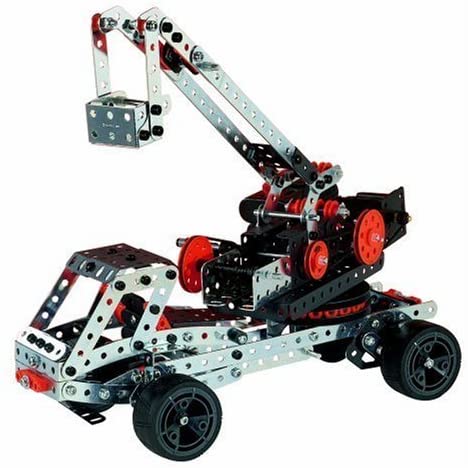
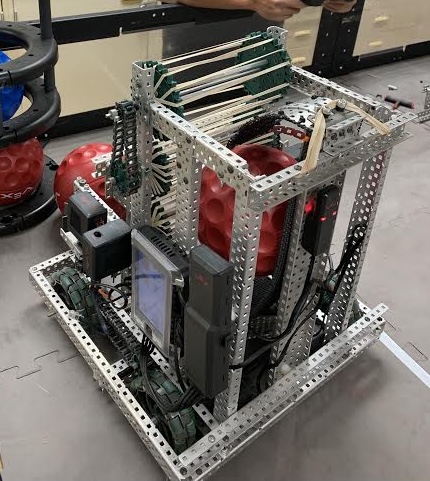
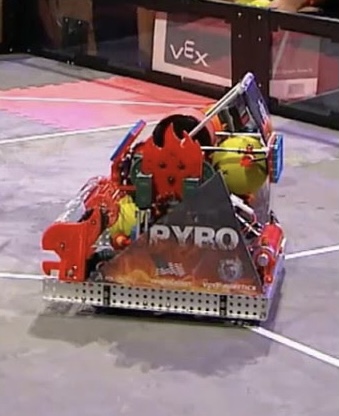
Not to mention… The VEX parts are so pre-constructed and repetitive that teachers and professors are telling me that VEX is just an erector set for high schoolers. One of these individuals came from an Engineering teacher at Ridge Point High School, who stated that VEX Robotics appeared too much like an “erector set” and to them it appeared to not give as much STEM experience as doing another competition where they turn wood pieces into robots. So they decided to not do VEX Robotics for that reason. So by allowing 3D printing it fills that additional merit that VEX is also something meant to teach beyond basic snap-in-place components.
Erector set:
VEX robotics without 3D printing:
VEX robotics with 3D printing:
There is clearly a psychological argument that helps clarify the merit of learning VEX robotics in STEM, if 3D printing is legal.
Yeah, I think Xenon did a better point of touching on the point that I’m not doing a good job of explaining. It’s not just a financial matter, the cost of a printer vs the cost of a sensor or a gear pack. When I use the phrase “privately funded 5-figure program”, it’s not just about financial budget. There are any number of factors which go into team diversity than that - number of students, mentorship resources, practice/build facilities, access to tools (e.g. CNC routing polycarb), number of events entered during a season (i.e. iteration opportunities), etc.
There are plenty of great points being made in this thread. Most of them are 100% accurate. Yep, allowing 3D printing would be a powerful teaching tool. Yep, it would increase robot design diversity. Yep, many students have had access to printers since they were in 6th grade. Yep, some teams would just use them to replace battery clips.
I’m not trying to debate any of those points, I think all of those are great things too. Just using this opportunity to shed some insight to the other points that we have determined to be of a higher priority (while knowing that some of you disagree with that prioritization).
I feel as though 3D printing being allowed or not is a battle between the appearance of simplicity, alongside the appearance of authenticity. If VEX makes their products appear too simplistic, the product appears more like a toy, similar to LEGO and plentiful other industries, as compared to a STEM-learning utility. But if they make their products appear too advanced, then VEX feels like VEX robotics will appear scary (which is what I am assuming is why 3D printing is not a consideration for this season, which is that fear factor). I will garuntee you that, without a doubt, VEX robotics will always appear extremely scary to those who enter it. And VEX robotics will always appear like witchcraft to the common persons. But, as VEX is how it is now, it appears childish and lacking to those within the Engineering industry who wish to teach STEM, or authenticate that a specific competition is capable of teaching STEM.
I feel as though, to some higher-level individuals who wish to give students educational knowledge of STEM and utilization of real-world experience, that VEX is perceived as almost a joke not to be taken seriously (no offense). VEX V5, in my opinion, makes the product appear worse as it appears to be perceived as VEX IQ but with metal parts. I am sorry if this appears bashful, but it is working that VEX is doing their job with making their products affordable for the most part. But, I feel as though making something appear toy-like will destroy the merit of the company. Everyone in VEX wants individuals to see a VEX robot and think “Wow that’s amazing!” to mentors and teachers of non-VEX classes. But because VEX is making the product more toy-like, anything presented to individuals above the common knowledge would laugh and say “You just made that with parts that snap-in-place with pre-made electronics that have wires that snap in place similar to LEGO Mindstorms.”
Am I the only one thinking this? Am I the only one who feels as though VEX robotics gives a negative perception by Engineering peoples due to its perception of extreme simplifications?
Speaking of disagreeing with our prioritization, I am again concerned that people are not reading my posts.
If you’re going to compare the GDC’s decision to one of the most successful tech giants in US history, please at least blame us directly instead of giving the credit to one of the organizations that we serve.
Side note, I’m not so sure why the Erector analogy is presented as an accusation. During my time as Director of Sales at VEX, one of my go-to phrases when talking to a teacher who had never seen it before was “it’s like an Erector set with sensors and lesson plans”. It’s the best way to describe the physical characteristics in one sentence or less. And, until Meccano comes up with a competition game, I’m not too concerned about losing teams to them.
I think you’re definitely right that at the late high school level, vex could be considered by some to not be “real engineering”. (which I strongly disagree with, but that’s beside the point)
But at the same time, the program needs to be approachable to middle school students. It’s meant to act as a gateway into the world of engineering, not necessarily as a limitlessly complex engineering challenge.
Again, I think there is a balance that can be acheived where if a team doesn’t know how or want to use more advanced manufacturing techniques, they don’t have to in order to be competitive. While teams that want to are free to do so in a way that doesn’t give them too much of an advantage.
There is always the perception of “going beyond” with the components in FIRST, while VEX robotics feels restrained by the parts associated with it, due to the appearance of extreme simplicity. When competing in EDR, I can never leave the environment of VEX, or even the illusion of it unless I am in VEXU (yet while in college, VEXU is perceived more as a niche product and a hobby as compared to a learning tool). I can never make my own product in VEX without utilizing the products from the same company. I feel like the pitch of “it’s like an Erector set with sensors and lesson plans” sounds justifiable for those who want an entryway for robotics, but the statement creates a lack of attachment for those who wish to provide something that goes beyond VEX robotics. To other teachers, they may worry “how will my students be perceived by higher-level STEM education systems?”
Many high schools are ran by people who care about college preparation, as compared to ease of entry. High Schools are perceived as a school where the once-were middle schoolers are forced to adapt to the change of environment, regardless of how intensive or difficult. So by not involving components that give a thought of “We also prepare students for college level Engineering” it becomes a turnoff for teachers who want to prepare.
To make another note, there is a reason why high schools provide students courses that can prepare them for college (AP, dual enrollment, etc.). By VEX robotics not give an appearance of having a similar aspect for college preparedness, the merit becomes little-to-none for those who see it on a resume for college admission. Instead of me saying “I got x trophy in VEX robotics,” I now have to say “I got x trophy in robotics” because including “VEX” has a negative connotation for universities.

 ).
).