Just wondering about how the rpms of each wheel and sizing needs to be calculated for a proper asterisk drive to be the best that it can be and just a general discussion about it and variances with other drives.
I’ve been brainstorming an 8-motor asterisk drive design. In this setup:
- Each X-drive wheel will be powered by a single motor.
- The center wheels use a PTO to switch two motors a wheel and asubsystem (like an intake or scoring rollers).
The PTO will be either a sliding or tilting type (I’m not sure of the exact term), and it will use a dual over-center locking mechanism to keep it securely engaged or disengaged.
- When the PTO is engaged, all 8 motors power the asterisk drive, and no motors are allocated to the subsystems.
- When the PTO is disengaged, the robot runs on a 4-motor X-drive, and two motors each power two separate subsystems.
This should still give me enough drive strength to move around and reach blocks or goals when I am in 4-motor mode. When the PTO is engaged, I should be able to be able to push most other robots effectively.
Does anyone think this may work? What isues do you think I may face with the PTO?
For thoese who think this is AI generated:
I did use AI to rephrase my thoughts so there are more readable, but all of the ideas were mine and I edited everything to match what I want to say. This should be fine, right?
I’ve been waiting for this topic to show up!
You will want the center wheels to be 1.41x the RPM of the X-drive wheels. This will match the speed of the X-drive part of the robot. I beleive if the RPM is a bit faster than this, it should be fine, but if its slower, you might have a problem. You should get clarication for this, though.
I like the idea for a PTO, of which would be quite useful this year for pushing other teams out of the way.
I have gotten other responses on the discord that this is the right speed that it has to be.
I believe bannanapi was right the first time, it’s kinda confusing how it works.
As for the OP’s question, I still stand by that holonomic drivetrains are basically never viable in V5RC because of their unnecessary complexity and the inefficient use of motors. The extra freedom of movement is very hard to actually use effectively, and even when done well it doesn’t offer enough benefit over a tank drive to make the downsides worth it. I’d think about how many specific scenarios you would actually use it, and figure out if that’s worth all the extra time you would spend building and programming it. Though if you want to build it just because it’s cool then go ahead.
Also I agree with gigahertz about the pto, asterisk drives are already very complicated and adding the extra complexity with the PTO makes the robot way harder to build without much benefit (imo)
I thought doing V5RC is about innovating rather than just sticking to a main meta? Who knows where the meta will go at all this year and so far 2-3 main ones are around and maybe if we end up making a difference, we could get asterisk drive, a drive that could be as good as a 6m tank drive, to worlds with enough planning.
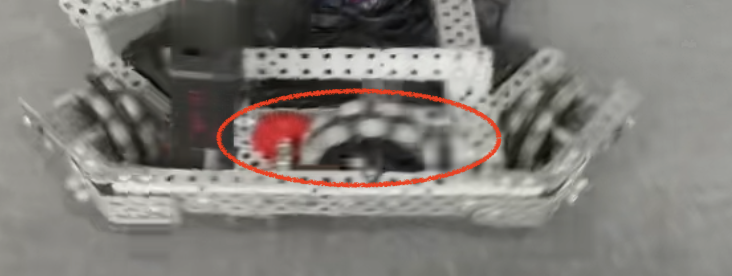
What is the drivetrain rpms that you guys have?
This is true, and I didn’t mean to imply that it wasn’t, but you need to remember that you don’t have unlimited time and resources. You can’t test every possible thing. Any time you spend developing one thing is time you aren’t spending on another thing, so it’s very important that you pick the right thing to work on.
If there’s anything I learned from robotics, it’s that it’s important to keep it simple when you can so you can innovate on things which are more likely to matter. In Spin Up my team spent almost three months meeting practically daily to work on a design for a catapult which could’ve been better, but ended up never working because it was just too complicated. If we had instead made a simpler (but still effective) design, we would have performed significantly better. Even if our catapult design had a chance of being better, we would have spent our time innovating where it mattered more.
Before building an asterisk drive, compare how much it will actually help you with the amount of time you would spend working on it. An asterisk drive means more weight, more complicated structure, less space for other mechanisms, a bigger disadvantage vs wedges, much harder programming, and much harder controls for the driver to use. It also means you have less time to make your intake smooth and reliable, less time to make your auto programs consistent, and less time to practice driving. All of this, for what? The potential to maybe be slightly more maneuverable?
If you still think it has potential (which it might, I don’t mean to say it has no potential), then the best advice I can give you is to set a time limit. If you get it working in time, that’s great! Your team might now have a competitive advantage over everyone else. If not, pivot while you still can. (Basically don’t do what my team did)
Sorry for the rant btw lol
tldr: It’s important to spend your time on things that will help you, not things that might help you. If you think that however long you’ll spend on the asterisk drive will give you an advantage, then by all means go ahead and build one. However, in my opinion, it’s better to spend your time innovating elsewhere (like on an intake or on autos, which will help you).
Great question! For an asterisk (or X-drive) setup, calculate the wheel RPM and sizing by considering the effective wheel travel—not just circumference, but factoring in the 45-degree mounting. The formula for linear velocity is:
velocity = (wheel RPM × wheel circumference) × √2 / 2.
Generally, smaller wheels give better acceleration/torque, larger wheels give more speed. Proper calculations ensure the drive utilizes motor power efficiently. Compared to tank or mecanum drives, X-drive offers excellent omnidirectional movement and agility, though pushing power and coding complexity can vary.
Well, with the new DT motor limit for Override, astrisk drives just got alot better. In addition to this, we now know the actual 5.5W and 11W motor torque curves (thanks to Charles in this post)
Has anyone made a script to calculate the linear speeds with having the center wheels at the correct 300 RPM max and the angled wheels at 700 RPM max? I was going to make one, but if someone else has one, that would be great!