What about this?

I mean, how often in VRC do you find a 6 wheel drive bucket bot with 4 mecanum and 2 regular omni wheels and a 2 motor lifter, or a 6 wheel drive with a ring intake a 4bar and one pneumatic claw/ wrap around lifter? At worlds, what I just described will take up something like 65% of the meta. If something is good, it will be used. Just look at the Starstruck High School Round Robin to go into the championship game. 11/12 of the robots looked nearly identical, and the sole outlier wasn’t used very much by their team.

I have lots to say about the “Lipperverse” ™ bots, but it will have to wait until later. (Spoiler alert, I’m for them)
But here is a tale from 2019 about a similar problem https://www.vexforum.com/t/why-yes-maam-your-robot-was-designed-by-a-professional-engineer/58474
It says the link is private…
I quite literally searched up “catapult” and it came up with tons of results. Maybe next time try looking first before telling someone they are wrong?:
https://www.vexforum.com/t/how-does-a-t-fling-catapult-work/98793/6
… and many more (I don’t want to clutter up the forums any more than necessary).
As one of the designers of Spitfire, I want to clarify an important misconception: There are NO instructions for Spitfire. None. They don’t exist. As for the model, I would think that would be referring to a physical model, not one in a video because the green box says it’s fine to get inspiration from videos. If there is no physical model and no instructions, then I don’t see where the violation is coming from.
Also, it is harder to copy piece for piece a robot from a
than one might think.

While you can see some things, there’s a lot that you can’t see. The biggest thing you can’t see here is the code. This is not an easy robot to build, even with guidance from pictures/videos, and coding it is also a major hurdle for anyone wanting a competitive Spitfire.
You could compare it to the meta robot in Next Level. All the robots at worlds were the same, and no one complained about them all copying each other. The 1st ranked robot was usually the same design as rank 20, yet one was so much better, because they thoroughly implemented the design process. They “stole from the best, and invented the rest”.


And that is exactly why that robot never has been and never will be in a competition.
I believe that “Design ideas leveraged from other… videos” was allowed. If someone is willing to put in the time and effort to holecount the entire robot and type out the code, that would probably take longer than actually building it. And if they don’t holecount this robot, they’re going to find someone else to holecount. The code as it is written in the screenshots won’t work for someone copying it who doesn’t understand it; that’s just how the world of coding works.
Just to clarify, the team I mentor has a completely different robot everyway shape or form from Spitfire. Through the season they have build many concepts and designs and in fact inspired many other teams with their designs. But this discussion isn’t about our team. It is about not jumping into conclusions that successful teams with a 4 ball 2 ball rear catapult design only cheated and didn’t put any work at all into their accomplishments. Again, it’s highly unlikely a team can just copy a design and win without putting any work in terms of testing, modifications, reiterations, etc. etc.
Even at the beginning of the season, how many teams have made fling bots? Why some perform better than others with the EXACT same instructions. During our first club scrimmage there was a first year team that built a fling and was consistently scoring 5-7 balls in the high goal. What did that team do better than other teams that built the “EXACT” same robot? There is an engineering process to produce good results.
Again, teams that get “highly” inspired by proven concepts do have a head start compared to teams building unproven designs or want to set precedence in designs. Believe you me, my team worked hard to shoot for unproven designs. But I feel it’s unfair to judge teams that go the route of reiterating a proven designs right away as cheaters when on the surface, you can’t not possibly know how much work these teams put in.
Cheers.
Putting my parent/grandparent hat on, so an unofficial response to this topic.
seriously, there’s a web site peddling build instructions and code ? That’s pushing the envelope too far in my opinion, lets hope nothing like this ever happens again.
what happened to this line of thought from last May.
Our goal is not to provide solutions by, for example finding the meta for the game and then sharing it with everyone so then the students just copy it and don’t engineer it themselves.
It scored 4 points less than a perfect score. How good would a robot have to be to be “too good”? The video had high def close up shots of every angle of the robot, even the bottom.

Why would they show close up shots of the bottom?
And there are plenty of other close up shots of all mechanisms.


There is a huge difference that you always seem to miss… And that is the difference between a competitive and a non-competitive design. You are advocating for a high preforming “starter bot.”
And in your story you fixed a hero bot. In my summer camp I had a team of people just keeping the flings going. That’s appropriate.
Adults providing models of competitive designs isn’t. It’s a clear violation of RECF’s student centered policy. And they are profiting off of their clout that they built for themselves.

But only if they have the ability to do that in the first place. The robot must represent the ability of the team. Simply saying that others are going to do it is an admission of guilt. And if some students will do so anyway, that doesn’t mean we need to make it as easy as possible.
There is no other video of this nature, of such a high preforming bot, posted in September, very early in the design process for most teams. Over half of the video was close up shots of all of the mechanisms of the bot.
There was one in August from China, it was so good that REC literally changed the rules of the game.
Stop complaining lol. Its reverse engineering, nobody is giving out step by step instructions. I agree that it takes some of the engineering out of it but sometimes theres a more simple way to do things and this is seen in real life all the time…
There are multiple cases of people copying and making better a certain design, this is why we have patents and copyrights.
Hey, isn’t there an online challenge with a trip to Vex Worlds for reverse engineering?
Anyway, I think this thread has run its course.
Everyone has said their peace and the creator of the referenced video has had a chance to defend themselves, which I think is fair.
Have a good night kids, time to make like Elsa and let it go.
Well, this thread got fun fast.
Here’s something to get worked up about, the Chinese teams are all working off the same design (8 ball high hanger), they are selling the CAD design for $1,000. Is that a CoC violation? They’ve been selling their designs for years. That’s something to get worked up about. A teenager doing something he likes and posting ideas to help people learn on YouTube, not quite as much.
care to post a link or something? I personally have not heard of this but I am not the most connected with the IQ world.
Whether or not this is a CoC violation aside, how many holecounted copies of this robot have you actually seen?
I have watched and been to many events, and not one robot I’ve seen was an exact copy. Nearly all weren’t even close.
Also, if the number of topics with people asking for help is any representation of how much teams are not able to get it to work, even with close-ups and code assistance, I would presume that it’s not as easy to build and get to work as well as the one in the video as many are making it sound.
Every catapult I’ve seen, while the for the most part employ the same or similar concept, could not for a second be confused for the one in the video. This is my data, and isn’t comprehensive. That being said, it is a decent indication of how many hole for hole copies there are.
One more point I’d like to include (from SCFarrell):
I had a team use razorbill and finish top 25 in the world. The build as done by Joseph would not get that for most teams. They used it as a base design and made at least a dozen design improvements to the initial design in order to improve function and reliability.
They credited their sources and documented their observations, testing and improvements.
Finally they added hundreds of hours of practice.
This is the way.
Emphasis mine.
My point here is that even if a team does holecount the robot, by that point they will have a good idea of how it works, why it works, and possibly even ideas to make it better.
In addition, they won’t be able to be able to compete at the highest level until they put in hundreds of hours of practice, including refining the robot (adding their own twist), to play marginally better, and to make it work for them.
You will never score the most points driving someone else’s robot.
this comment chain has brought a lot of good points, and i would like to bring up one crucial point. Spitfire is a very good robot, but at least for teamwork , all the top alliances will need to high hang,
Building a robot capable of high hanging without compromising the consistency of the catapult is a difficult feat, and simply modifying the spitfire design wont do.
The whole point here is for students to build and design robots. Adults that build and design robots, on all levels, is incorrect.
It’s worse in China, as it has been for years.
Some people make money off of it which is even worse, and is wrong.
But it shouldn’t be happening on any level. In my first year of teaching robotics I built an arm as an example for the kids and they all just copied it. Even if they didn’t do a perfect job, any time an adult builds something it influences student design processes. It’s never a good idea.
That’s why the COC says that adults shouldn’t even build models. The fact that there is a Lipperverse proves that adult designs have a deep impact on the community and that takes away from student creativity. I believe that you all keep pointing to a small slice of the community and ignoring the larger impact.
Do adults participate in that challenge?
Did any of those videos:
- Have adults building robots? Not in the videos themselves, but have precedent in that area.
- Have up close shots of all parts of the robots? No. The video in question spends a couple of minutes panning all aspects of the robot. No other video does this.
Of course students will change it because they know that they have to. You not finding exact replicas does not mean that this design, built and operated by adults, did not have an undue impact on the VEX IQ community. As much as possible, students should be leading the way.
Of course this is wrong. Adults should not be designing and building robots, for profit or not. And we should be calling it out wherever we see it.
The two above posts come from very different regions. One where a “spitfire” bot would win, and one where it wouldn’t. There are a lot of different regions with different levels of competition, and this design will have a different impact based on the region. If you’re in a not-so-competitive region, I can see why you think this isn’t a big deal. If you’re from a REALLY competitive region, I can see why this isn’t that big a deal. Try and think of the community overall.
I would say this overall: Adults influence on student design should be minimal. Adults designing robots, for any reason, will have an influence of student designs and it shouldn’t be done.
For students, not adults. Students should not be leveraging adult designs except for the hero bot, which has a specific exclusion in the code of conduct.
The difference here is this… The designs that you reverse engineer should be student designs. Adults should not be designing competitive robots.
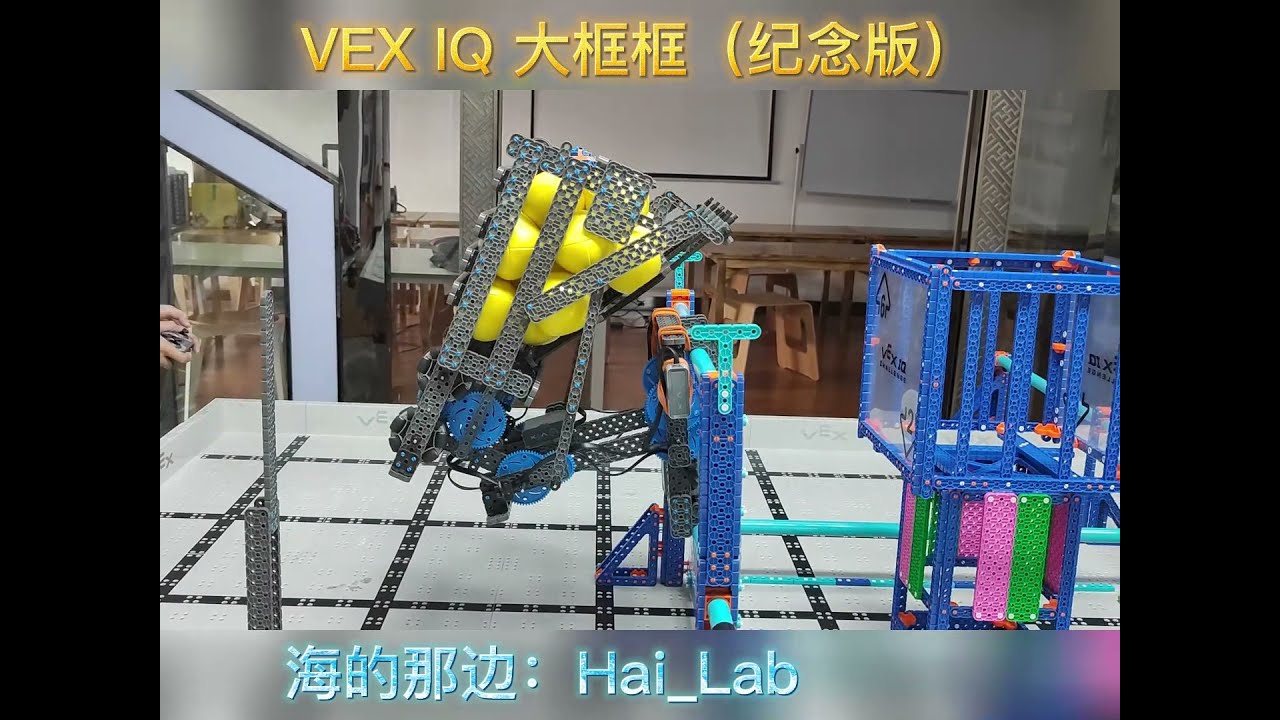
Here’s a video showcasing one mentor’s design process for this type of robot (dubbed the “inverted ball car”). This video, although released well past the rule change, shows an adult (check his bio if you are not sure) working on the robot, with seemingly no input from any students.
Although I have get to see any “full reveal” of this type of robot (like what was done with Spitfire), judging by my experiences as an IQ judge (as previously mentioned), it must definitely seemed that teams were able to use videos from his channel and others to build these dumper bots (heck, one team decided to stick with it but change their strategy as they felt that they had spent too much time on the dumper bot to warrant building a new design).
VEX IQ can go up to 15, so I don’t know if we can conclusively say that this person is not a VEX IQ competitor. I’ve seen kids that look older, especially in MS VRC. I have also seen adults that look younger.
And even if we can find them, I think it would be helpful for us to collectively agree that adults shouldn’t be building competitive robots. That’s it. Competitors can design and build robots, and share as they see fit. Adults, as defined by the respective game, shouldn’t.
Spitfire was built to never be used in competition. It was built for another purpose. We can’t run the experiment where this didn’t get released so we will never truly know its impact.
We don’t know if very similar designs would have emerged anyway. However, we have to try, as much as possible, to be sure that it’s the students taking charge. The only way to do that is for each adult to collectively decide that we will let the kids do the work. That didn’t happen this time around. But at the very least we can agree that the adults should stay out of the way as much as possible.