We are thinking of building Amogo and we are looking through the pieces and we saw the piece “lexan for conveyor,” and we saw that it is a type plastic, but does anybody how what size it is?
We were wondering how does the platform climber deploy for AMOGO. Is it tied to one for the motors as a latch or is it just gravity?
It uses gravity and the momentum generated by moving forwards to fall down. If you could control it using pneumatics or a motor I would do so, as AMOGO can not get rings up against the wall because of the parking mechanism.
@Milo is correct, just gravity makes it fall down.
I agree.
We thought it would be nice for the piston to power the collar in the standoff linkage. So when the mechanism locks, no force goes into the piston. It al goes into the standoffs, collards, and other structure.
Yes… we have the base working but not the platform climber on the robot and we are able to get rings up against the wall. It’s a great design.
I’m curious of the influence these robots have had on (especially newer) teams.
- I have seen an AMOGO holecount at a local tournament.
- I have seen multiple AMOGO holecounts at local tournaments.
- I have not seen any AMOGO holecounts at local tournaments.
0
voters
- I have seen a DOGO holecount at a local tournament.
- I have seen multiple DOGO holecounts at local tournaments.
- I have not seen any DOGO holecounts at local tournaments.
0
voters
Now of course, “holecount” can be a dicey term, so go with your gut.
Once again, thank you to Harvard-Westlake for releasing these robots!
it depends what you define as holecount. I’ve seen plenty of robots that have similar layouts, obviously influenced by amogo. (as pretty much every conveyor-based alliance goal ring scorer is) But I haven’t seen any robots that are clearly hole for hole replicas.
It’s pretty clear why these robots have had such an influence on the season, amogo in particular was the first revealed robot with such an efficient flap based ring scorer, and because they were revealed so thoroughly they’ve become a great resource for new teams.
I have seen 3 direct AMOGO holecounts, but only 1 direct DOGO holecount. I have seen many more robots with very similar designs to both robots, but that each take a new and innovative approach.
I’ve seen some interesting amogo holecounts… 3033S i believe added a front lift to amogo and basically made an overpowered hoarding bot that did rings as well.
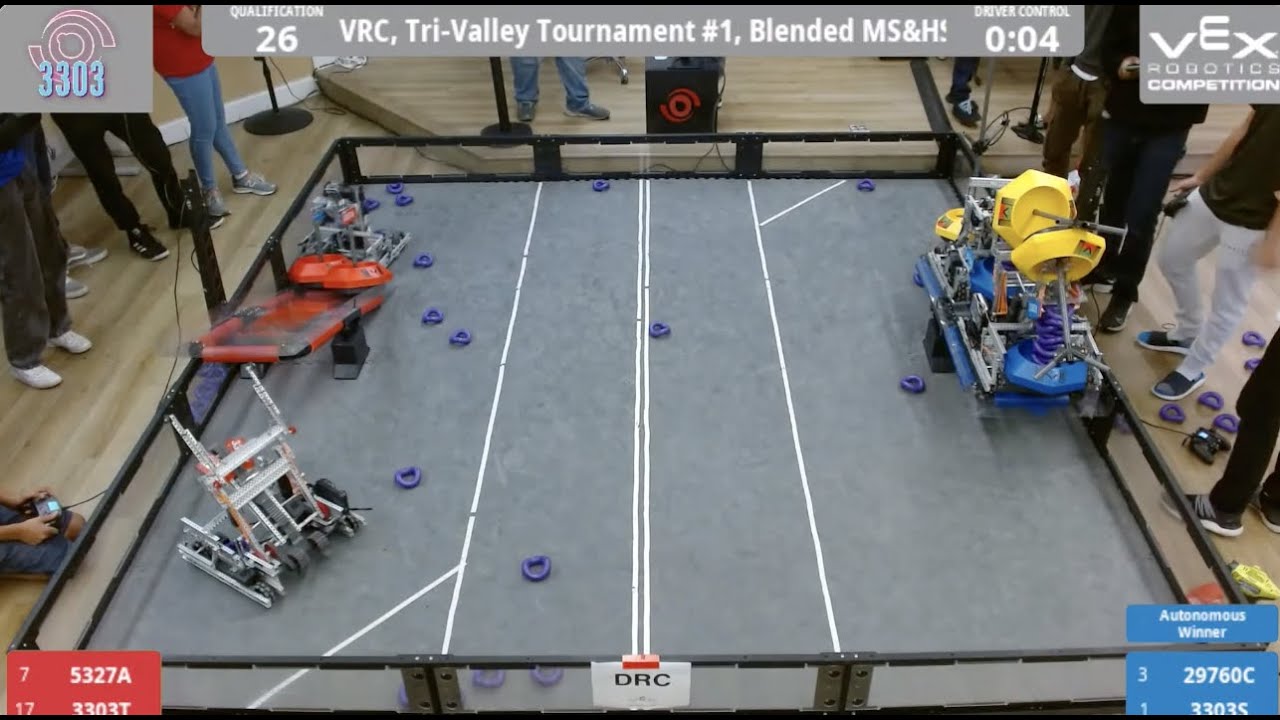
Question, what exactly is a “hole count”? From context it seems like it means an almost exact copy of the robot, but I am not sure
It means you copy the robot hole for hole, which ends up with you have a robot exactly the same as the other one.
so… how is this still considered as “holecount” ?
We have just finished building Amogo and our sister team built Dogo. Both of these robots have been overheating and I was wondering if this has happened to anyone and what they did to stop the overheating? We have used the correct 100, 200, and 600 motor cartridges.
What part of the robot is overheating? How long were you using them before overheating? After intense use we’d sometimes find our lifts and drives get warm.
Check for friction on your mechanisms, you want spacers to be able to wiggle a little bit. Make sure all your screw joints are good and no screws are rubbing on the drive. Maybe you’ll move the lift and it’ll feel fine, but when there’s a goal in it friction appears.
Our robot was overheating everywhere. If we were driving and using our drivebase a lot than the motors would stop working and shutdown the motors. Or, if we use our mogo lift or conveyor belt all would shut down from over heating. We have tried losing and tighting different pieces as well as makeing sure there is no screws or any piece that will affect the driving. Do you have any other ideas? Thanks again, great robots.
how much time does it take to overheat? what’s the ambient temp?
Amogo and dogo both shouldn’t be overheating, make sure that there is no unnecessary friction. It is weird that the whole robot is overheating though, are you using the preprogrammed code? Also how hot is it where you are driving these robots?
It takes about 1 - 2 minute to start over heating (level 1) and about 10 minutes for total shutdown (level 4). The teams drive at the school, but I don’t know how hot the room is.
There is probably some friction in the places that overheat first, which is what is causing the issues. If you can’t find any place with friction, try taking off one of the motors that overheats quickly and just run it without it powering something. If it doesn’t overheat while being run, then it is an issue with the robot. If it does, then I do not know the solution to that.